

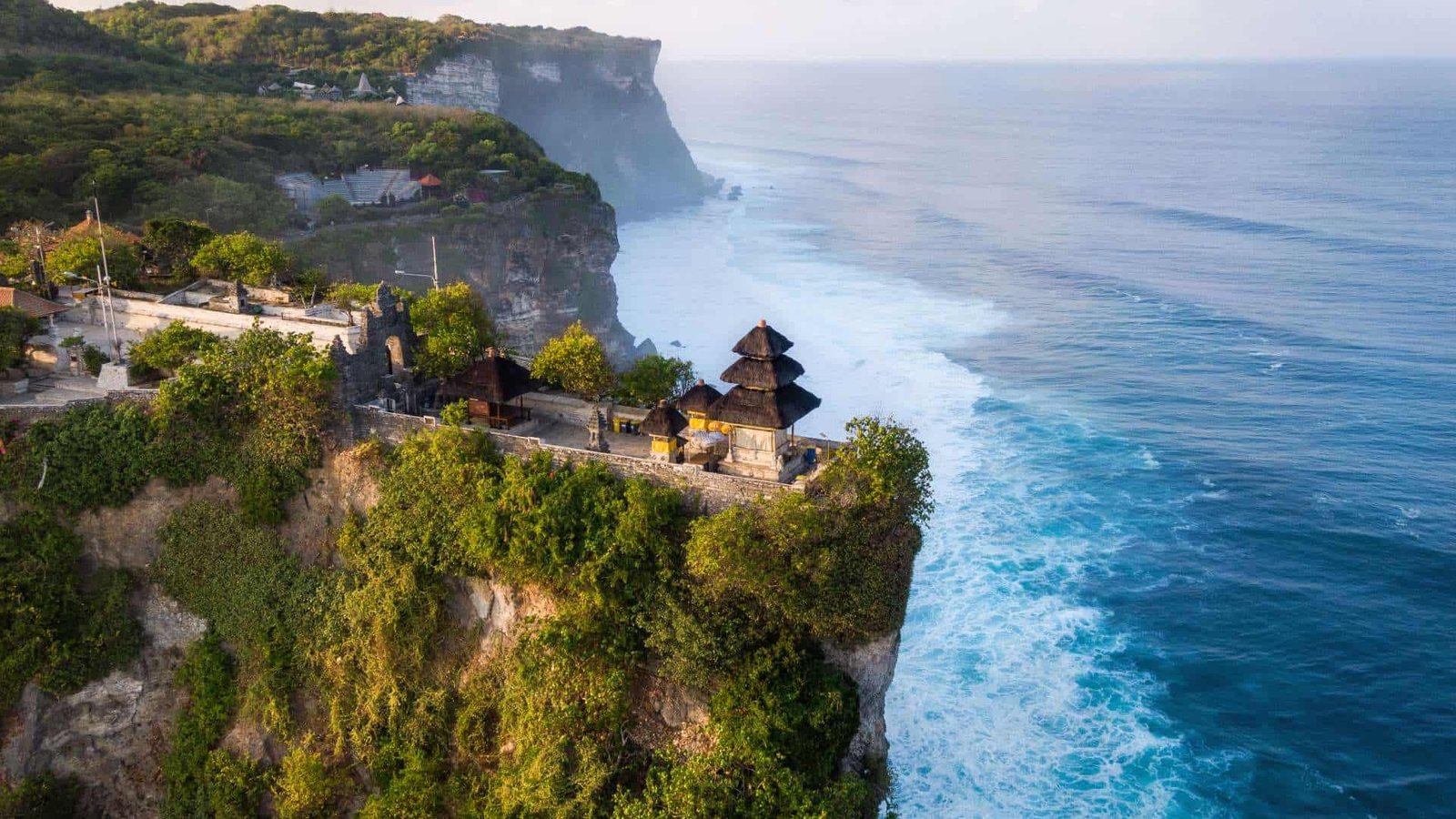
Uluwatu Temple, or Pura Luhur Uluwatu, is located on the Bukit Peninsula, near the village of Pecatu, in the southwestern part of Bali. It is one of the most famous and revered sea temples on the island, playing a key role in the spiritual life of the locals.
Pura Luhur Uluwatu: a sacred summit on the edge of a cliff
Pura Luhur Uluwatu is one of the holiest sites in Bali. The temple’s name comes from two words: “ulu” meaning “top” or “headland,” and “watu” meaning “stone” or “rock,” which reflects its location. The temple stands on a cliff about 95 meters high, overlooking the ocean. From its grounds, visitors can enjoy breathtaking views of the sea, and on clear days, even see the coastline of Java. The temple is especially spectacular at sunset, when golden rays illuminate the cliff.
Architecture and layout
The temple complex is divided into three courtyards — outer, middle, and inner — each with its own meaning and level of access.
- Outer courtyard
- At the entrance stand the traditional candi bentar split gates, meant to ward off evil spirits.
- The main gates are on the southern side, guarded by a statue of Ganesha, the god of wisdom and protector of travelers.
- Here is also the Dalem Jurit Temple, dedicated to Rudra Shiva, goddess of storms, winds, and hunting. Built in the 16th century, it includes a sacred well whose water never dries, even in the driest seasons.
- Middle courtyard
- Leads deeper into the complex, through gates adorned with carvings of elephants and winged deities. Decorated with intricate leaf and floral motifs, these gates date back to the 10th century and are the oldest part of the temple.
- This level also features stone steps leading to shady trees, behind which stands a statue of a Brahmin gazing out over the ocean.
- Inner courtyard
- The holiest part of the temple, accessible only to priests. It houses the throne of the supreme god Sang Hyang Widhi Wasa, as well as two ceremonial halls for sacred rituals.
- Within this courtyard, locals pray for protection, prosperity, and harmony.
Sacred significance
For the Balinese, Uluwatu is among the most sacred places on the island. It is revered as the unifying site of the three main Hindu deities:
- Brahma (the creator),
- Vishnu (the preserver),
- Shiva (the destroyer).
The temple is also associated with the sea goddess Dewi Laut, who, according to legend, transformed her boat into the cliff. Local fishermen still come here to pray for calm seas and bountiful catches.
Legends and beliefs
According to local belief, the cliff on which the temple stands is the petrified remains of the goddess’s boat. The Balinese hold that Uluwatu radiates powerful energy, linking earth, sea, and sky. This connection makes it not only a spiritual site but also a cultural symbol of Bali, representing the harmony between humans and nature.
Tips for visitors
- Visitors must wear a sarong, which is available for rent at the entrance.
- Tourists are not allowed into the inner courtyard, but exploring the outer and middle courtyards, as well as the cliffside paths, offers a rewarding experience.
Conclusion
Uluwatu Temple is a place where natural grandeur and spiritual power meet, leaving a lasting impression on all who visit.
Uluwatu Temple (Pura Luhur Uluwatu): origins, legends, and historical stages
The history of Uluwatu Temple is shrouded in myths and mysteries, and its exact founding date is still debated among historians. Archaeological research and local legends reveal the multilayered past of this sacred site.
Origin of the temple
- 9th century or megalithic era: Recent archaeological excavations suggest that the first ritual structures may have been built here as early as the 9th century or even during the megalithic era.
- 10th–11th centuries: Historical data indicate that the temple was founded during the early spread of Hinduism and Buddhism in Bali. Some sources attribute its construction to the 10th century, others to the 11th.
- 16th century: The central shrine and main structures were completed or reconstructed in the 16th century.
Founders of the temple
- Mpu Kuturan: According to legend, the temple was founded by the Buddhist monk Mpu Kuturan, who is also credited with building the temples of Sakenan and Goa Lawah. However, there is an opinion that the first shrine at this site existed even before him.
- Dang Hyang Dwijendra (Nirartha): In the 15th century, the monk Dwijendra, also known as Nirartha, lived at the temple. Legend claims that he became the architect of the main shrine of Uluwatu and many other temples in Bali, including those on Lombok and Sumbawa.
- Tradition says that the face of the Brahman statue located in the temple represents Nirartha himself.
- Another legend tells that he reached the highest stage of enlightenment and entered nirvana with his physical body, accompanied by a bright flash of lightning. A relic associated with Nirartha — the boat on which he arrived from Java — is preserved in the temple.
Connection with Balinese history
- Mengwi Kingdom: In the 17th century, during the fragmentation of the unified Balinese state, Uluwatu became part of the Mengwi Kingdom. As a sea temple, it was one of the three main state shrines, complementing the city and mountain temples.
- Reconstructions: Archaeological data show that Uluwatu was not built from scratch during this period. Instead, existing structures were reconstructed and new architectural elements were added.
Trials of time
- Lightning strike in 1999: The temple was struck by lightning, which destroyed part of the structures. However, after restoration, its historical appearance was fully preserved.
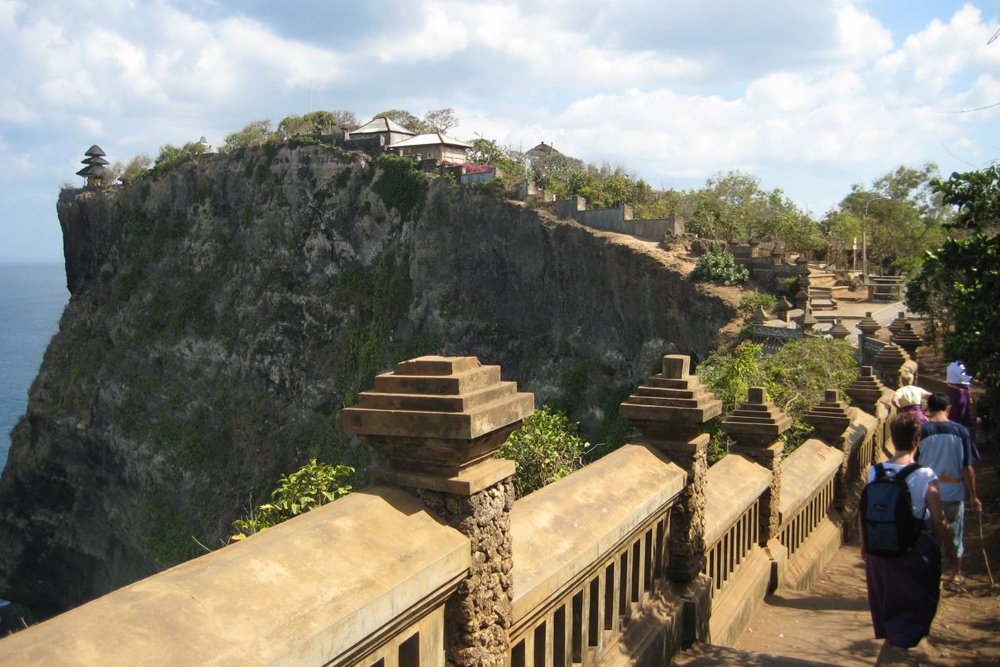
- Before 1983: Access to the temple was extremely difficult. Visitors had to climb a steep path, making the journey dangerous for unprepared travelers. Today, a convenient staircase has greatly simplified access.
Modern times and significance
Uluwatu remains one of the most visited temples in Bali thanks to its spiritual importance, unique location, and natural beauty. Annual rituals are held here to maintain harmony between humans, nature, and the gods. Legends and historical reconstructions make Uluwatu not only a holy sanctuary but also a place that reveals the centuries-old culture of the island.
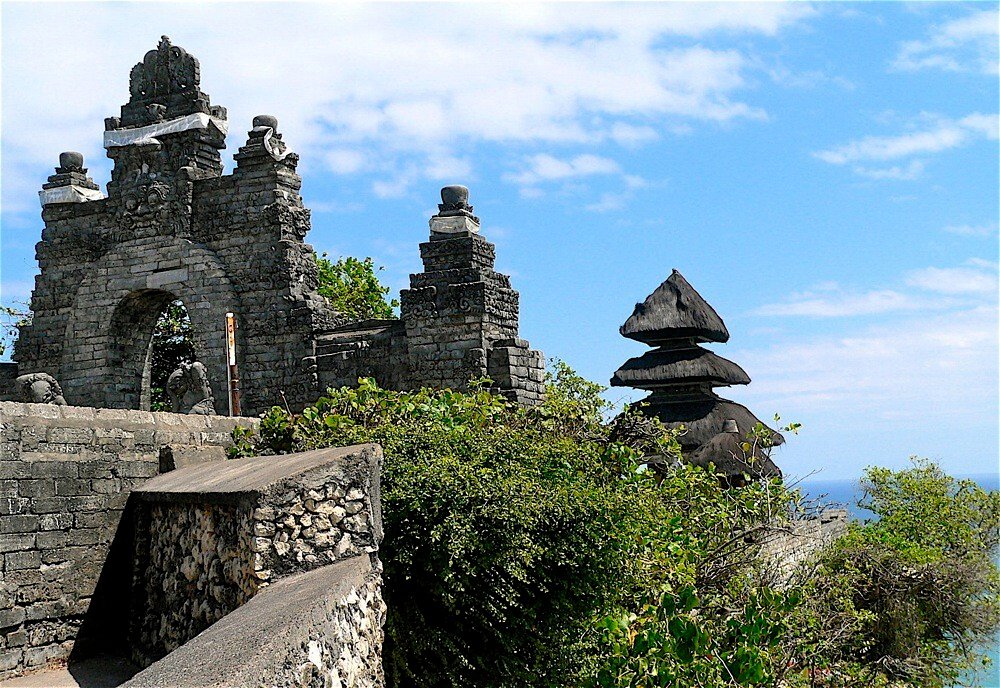
Uluwatu Temple is here