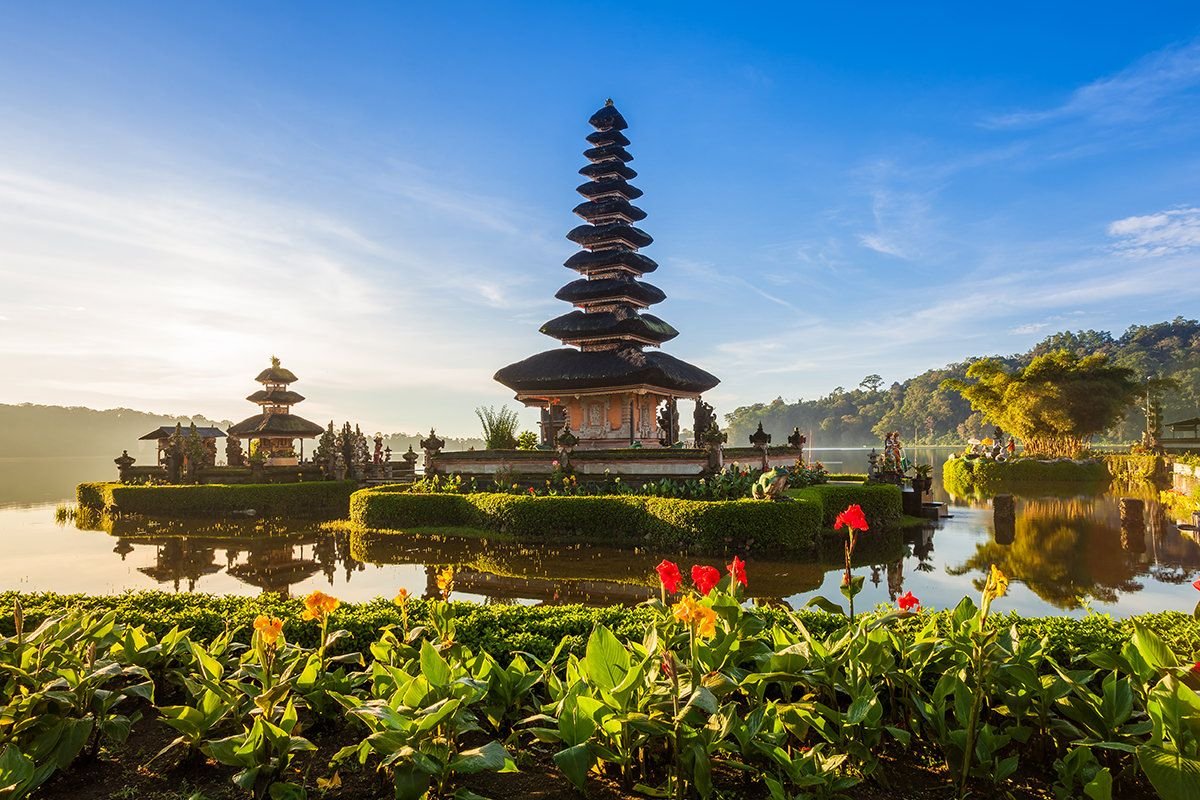
Ulun Danu is one of the sacred temples of Bali. Such temples are located throughout the island and are believed to protect its inhabitants from evil spirits. The name of the temple literally translates as “head of the lake.”
Pura Ulun Danu Bratan is among the most famous and revered temples in Bali, located on the shores of the picturesque Lake Bratan. Surrounded by legends, this temple complex carries a mystical allure.
One story says that after the temple was completed, the goddess of lakes and rivers, Dewi Danu, was so pleased with it that she raised the water level to claim part of the sanctuary for herself. Thanks to this effect, the temple often appears to be “floating”—especially during the rainy season, when the lake waters rise close to the buildings. If you want to witness this extraordinary sight and capture stunning photos, the best time to visit is when the water level is high. In the dry season, for example in September or October, the temple loses its floating effect, and each shrine can be reached on foot.
According to tradition, the complex was built on the orders of the Mengwi prince, and its construction was carried out by master weapon-smiths who crafted blades for the island’s nobility. However, the artisans worked not by choice but by obligation. Once construction was finished, the prince allowed them to live within the temple grounds and continue their craft. Later, however, the blacksmiths were expelled by invaders from the island of Java.
Pura Ulun Danu is revered as one of the most sacred places in Bali. Lake Bratan, on whose shores the temple stands, plays a vital role for the island, providing fresh water to countless irrigation systems. In some places, the lake reaches a depth of 35 meters, making it a critical natural resource. Ulun Danu Bratan is therefore both a spiritual and natural symbol of Bali’s harmony and beauty.
As you pass through the temple’s main gates, you will encounter the multi-tiered architecture typical of Balinese culture, embodying the island’s deep spirituality. The complex’s three main shrines, reminiscent of pyramids, are dedicated to the principal deities of Hinduism:
- The first shrine — the tallest and most iconic — is crowned with eleven tiers and dedicated to Vishnu, the preserver of the universe. It symbolizes stability, protection, and harmony.
- The second shrine, with seven tiers, is dedicated to Brahma, the god of creation. It represents the creative energy from which all life emerges.
- The third shrine, with three tiers, is dedicated to the supreme god Shiva. It symbolizes cosmic consciousness and the unity of the immovable masculine and the dynamic feminine principles that together create universal balance.
Together, these three shrines reflect the Trimurti — Vishnu, Shiva, and Brahma — embodying the harmony of preservation, destruction, and creation, which lies at the core of existence. This architectural ensemble not only impresses with its beauty but also invites reflection on unity and the cyclical nature of life.
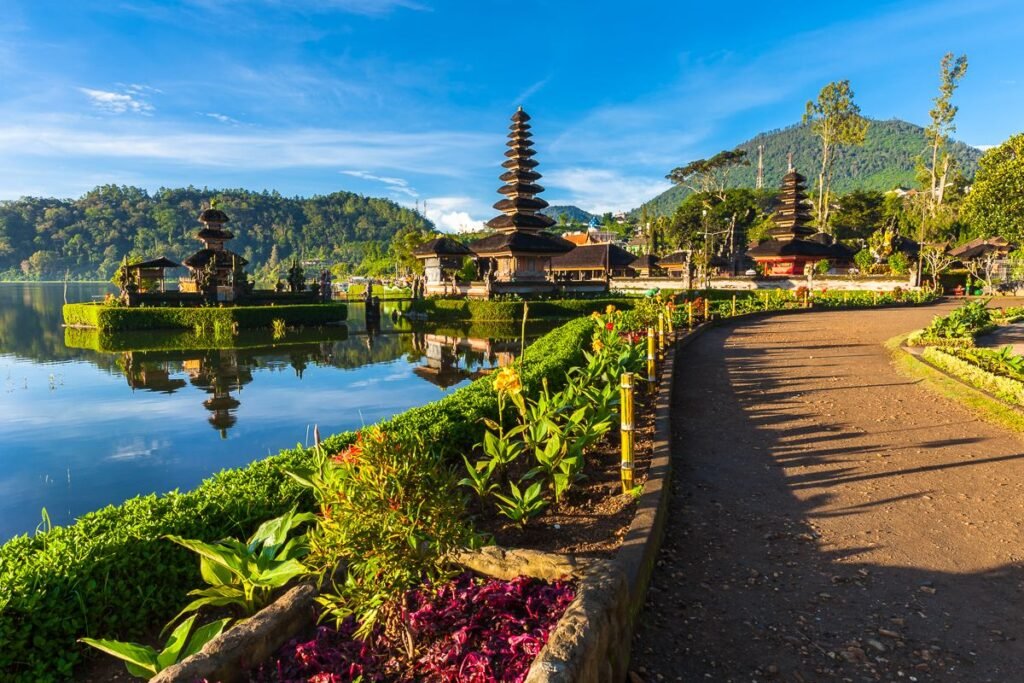
Ulun Danu Temple — a sacred complex on Lake Bratan
Ulun Danu Temple is a vast complex consisting of ten separate temples, which together include 285 shrines and pavilions. These holy places are dedicated to the gods and goddesses of water, agriculture, arts, crafts, and sacred springs — all of which play a vital role in the lives of the Balinese people.
Religious ceremonies and festivals
To gain the blessing of the water goddess Dewi Danu, on whom harvests and the well-being of local communities depend, the temple hosts frequent rituals and colorful ceremonies. Worshippers bring offerings to the goddess, filling the temple grounds with the vibrant spirit of Balinese traditions. The most significant festivals include:
- Temple’s sacred day — Piodalan. Celebrated every 210 days according to the Balinese calendar, this festival marks the anniversary of the temple.
- Piodalan Agung. The largest celebration, held every 420 days, which gathers thousands of worshippers and visitors.
Tourists are welcome to explore most of the complex, except for the central sanctuaries where important religious ceremonies take place.
Additional areas of the complex
- Children’s playground. A simple space to keep children occupied for a short while.
- Park area. Spacious and harmoniously blending into the surrounding nature, ideal for walking and relaxing.
Location and features
Ulun Danu Temple lies far from Bali’s busiest tourist zones, high in the mountains at an altitude of over 1,200 meters above sea level. This serene setting makes the atmosphere especially tranquil. At the same time, the temple is known to everyone in Indonesia — its image appears on the 50,000-rupiah banknote.
A visit to Ulun Danu Temple is not only an introduction to the spiritual side of Bali but also a chance to enjoy the majestic natural landscapes that surround this unique temple complex.
Pura Ulun Danu Temple is located here