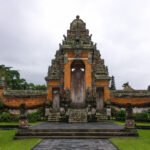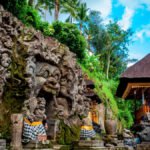


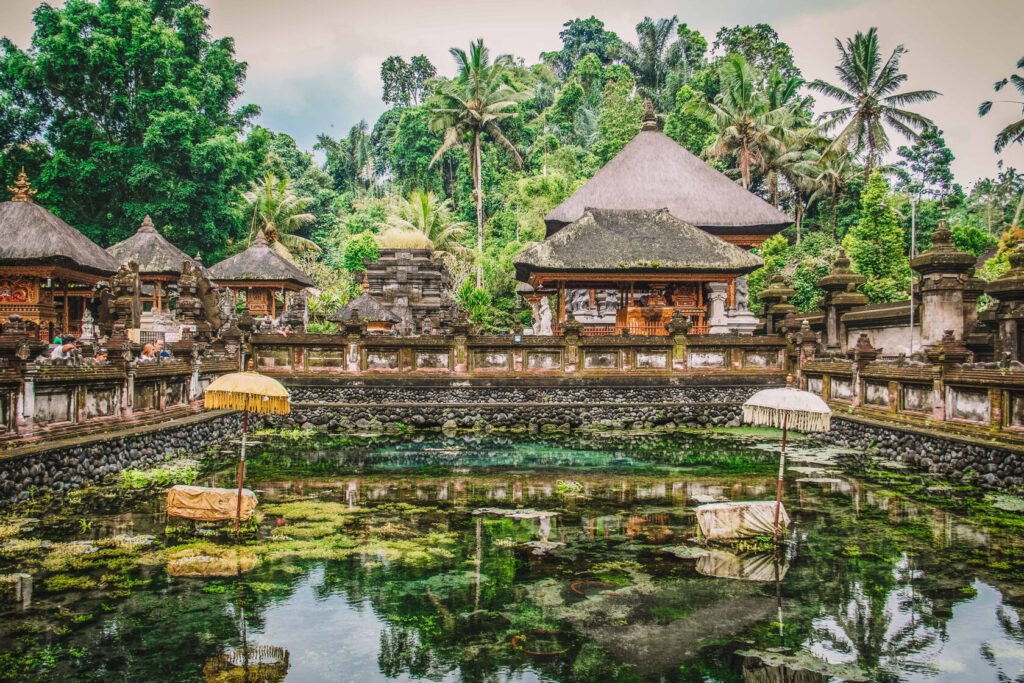
Tirta Empul Temple (Pura Tirta Empul) is one of the most sacred and well-known temples in Bali, located in the village of Tampaksiring, about 39 km from Denpasar and only 14 km from Ubud. It is famous as the Temple of Holy Water, serving as an important place of purification and prayer for both locals and visitors.
Tirta Empul: the temple of holy water and spiritual purification
Built in 962 AD in honor of the god Vishnu, Tirta Empul is revered for its sacred spring, whose water is believed by Hindus to cleanse the soul and body and bring healing.
Location and architecture
The temple is located in East Bali, 39 km from Denpasar and 14 km from Ubud, and occupies a spacious area surrounded by lush greenery. The complex is divided into three main sections, typical of Balinese temple architecture:
- Jaba Pura (Outer Courtyard): Includes parking, souvenir stalls, food, drinks, and pavilions for preparation before rituals.
- Jaba Tengah (Central Courtyard): Home to the famous purification pools.
- Jeroan (Inner Courtyard): The most sacred part of the temple, reserved for Balinese prayer and rituals.
Each courtyard is separated by gates decorated with traditional Balinese carvings.
The sacred spring and pools
Within the complex, there are three main pools, each with its own purpose:
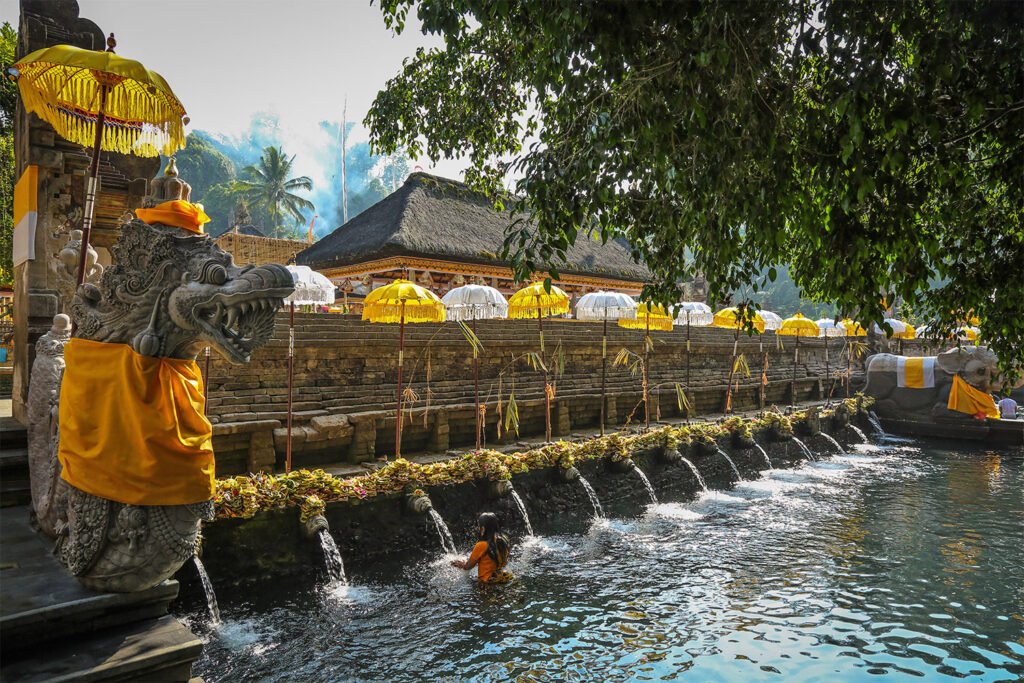
- First pool: The spring of holy water, called amrita (the water of eternal youth). Sand and algae can be seen at the bottom, and the clear water appears to pulse with energy, symbolizing the essence of life.
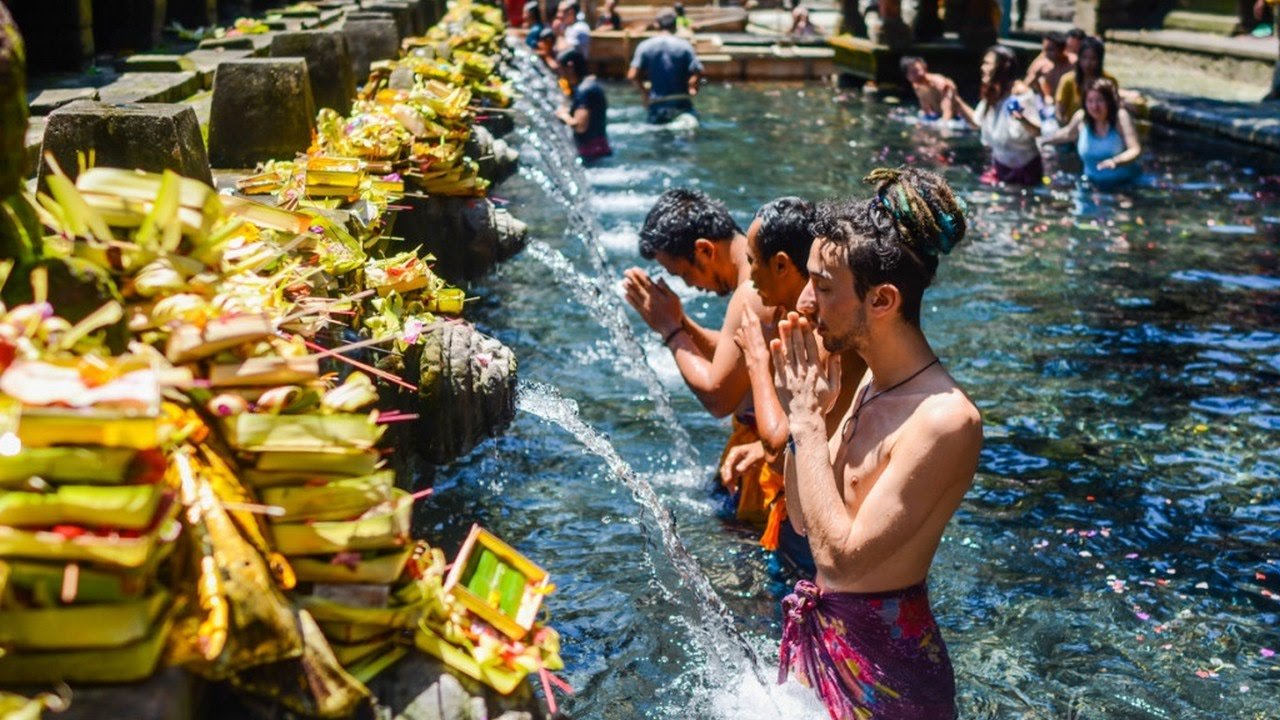
- Second pool: Consists of three large bathing areas where the purification ritual melukat begins, accessible to tourists. The ritual starts from the first spout on the left and continues through 13 water spouts. Two of them, the 11th and 12th, are reserved for the deceased and should not be used by visitors. This ritual is believed to relieve stress, cleanse karma, and bring balance.
- Third pool: Reserved for Balinese worshippers. It contains seven spouts, each dedicated to a specific blessing such as health, prosperity, chakra cleansing, or support for pregnant women.
Nearby, there is another pond without fountains where fish swim. For a small fee, visitors can feed them or take photos.
Other highlights of the complex
The temple grounds feature around 20 shrines and pavilions (bale), dedicated to different deities such as Vishnu, Shiva, and Brahma. Offerings and prayers are made here.
A large banyan tree grows within the temple grounds, wrapped in a sarong along with several statues — a symbol of respect for the sacred.
In a nearby pavilion, traditional gamelan instruments are displayed, used during ceremonies.
Interesting facts
- The villa on the hill: Near the temple is a villa that has hosted many celebrities. In June 2017, former U.S. President Barack Obama stayed here during his family vacation.
- Local market: At the entrance, visitors can explore a market selling sarongs, souvenirs, local drinks, and snacks.
Tips for visitors
- Dress code: Wearing a sarong is mandatory (available for rent at the entrance).
- Rituals: Respect traditions and follow the instructions of local guides when participating in purification rituals.
- Best time to visit: Early morning or late afternoon to avoid crowds.
Why visit Tirta Empul
Tirta Empul is not only a sacred temple but also a monument of ancient Balinese architecture, set amidst beautiful natural surroundings. The opportunity to take part in traditional purification rituals, admire sacred statues, and enjoy the peaceful atmosphere makes it one of Bali’s must-visit spiritual landmarks.
As already mentioned, the founding date of Tirta Empul Temple is considered to be the year 962. However, behind this sacred site lie not only historical facts but also captivating legends.
According to one of the most famous stories, in the kingdom of Pejeng there once ruled a powerful and cunning king known as Maya Denawa, a master of black magic. He possessed the ability to transform into animals or objects, and he used these powers not for good, but to oppress his people.
Over time, the king was consumed by arrogance. He decided that his might was equal to that of the god Indra, and he dared to proclaim himself Indra’s equal. To assert his power, Maya Denawa forbade the people to pray to the gods, destroyed all temples, and mocked their spiritual devotion.
The god Indra, seeing how the king abused his power, grew furious. He gathered his army and marched against Maya Denawa to punish him for his heresy. But the cunning sorcerer, anticipating his fate, devised a scheme: he poisoned the water sources in order to destroy Indra’s warriors. By morning, when they drank the tainted water, the army of Indra fell dead.
Enraged even more, Indra struck his staff against the earth, and at that spot a new spring burst forth, its waters blessed with healing powers. When Indra gave this holy water to his army, the soldiers came back to life.
Realizing that his plan had failed, Maya Denawa attempted to flee. As he ran, he transformed himself into a stone, hoping to remain unnoticed. But Indra shot an arrow into the stone, and from it blood began to flow, turning into a river. Thus, the sorcerer was defeated, and his tyranny came to an end.
On the site of the sacred spring, a temple was built, which since the 10th century has become a place of pilgrimage for the Balinese. They believe that the waters of the spring bring happiness, love, health, and cleanse the soul of sin.
This legend explains not only the origin of the sacred spring but also its significance for Balinese spiritual culture, making Tirta Empul an inseparable part of the island’s history and traditions.
The temple of Tirta Empul is located here