

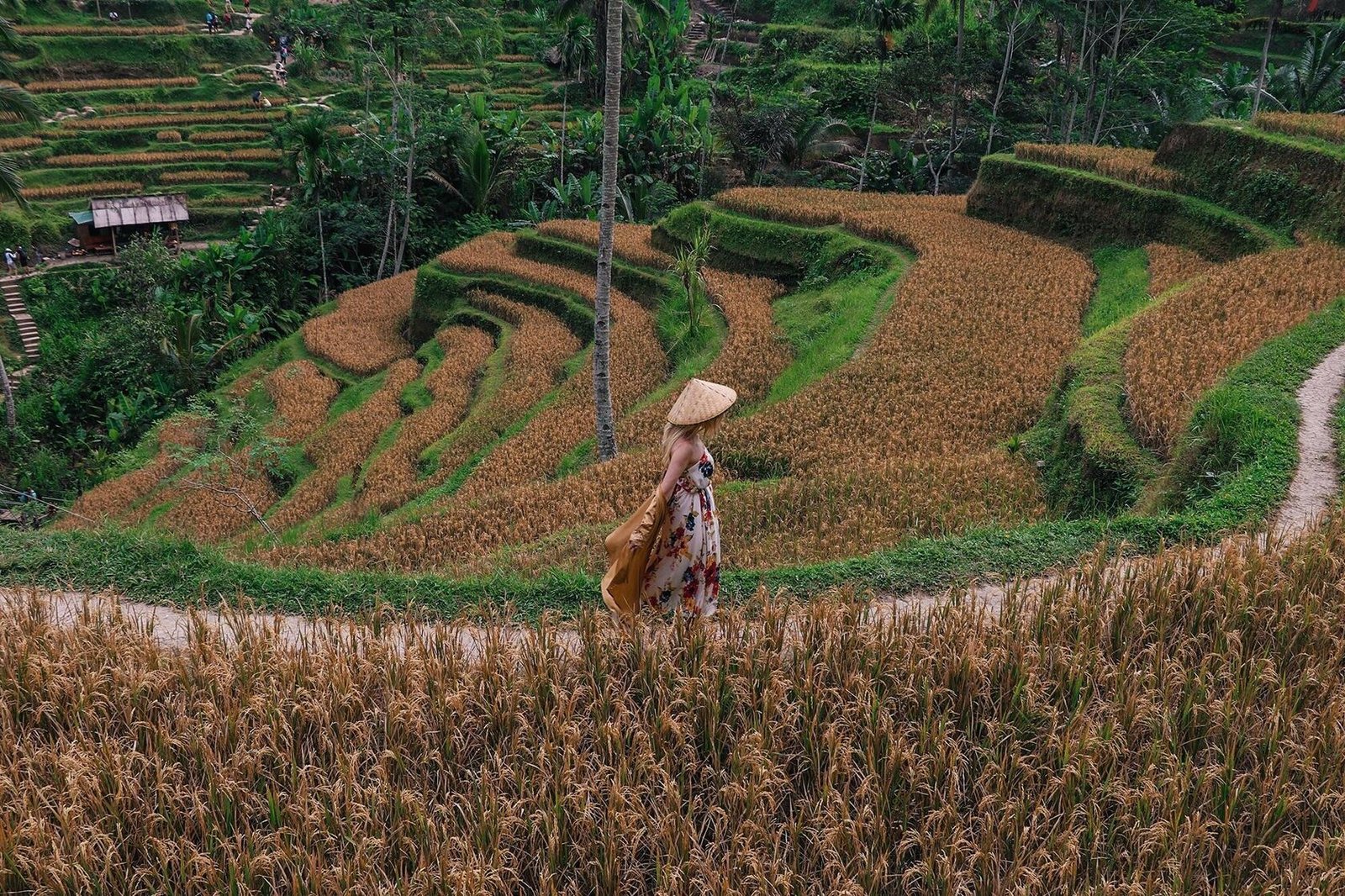
The Tegallalang Rice Terraces are one of Bali’s most beautiful and famous attractions, located in the central part of the island, 9 km north of Ubud. The terraces sit at an altitude of 800 meters above sea level on the slopes of a river valley. This site is renowned not only for its natural beauty but also for its unique irrigation system, which is included on the UNESCO World Heritage list.
The terraces were created around 1,200 years ago, likely in the 9th century. They were built by hand, allowing rice to be cultivated even in mountainous terrain. The irrigation uses the ancient Subak system, based on a complex network of underground channels that ensures even water distribution to the fields. Subak is not only an engineering achievement but also a community of farmers guided by principles of harmony with nature, the gods, and society.
The Subak system protected farmers from conflicts and guaranteed equal access to water. It also incorporated spiritual aspects, including regular ceremonies and temple festivals dedicated to the gods of harvest.
Rice Cultivation Process
Growing rice involves several stages:
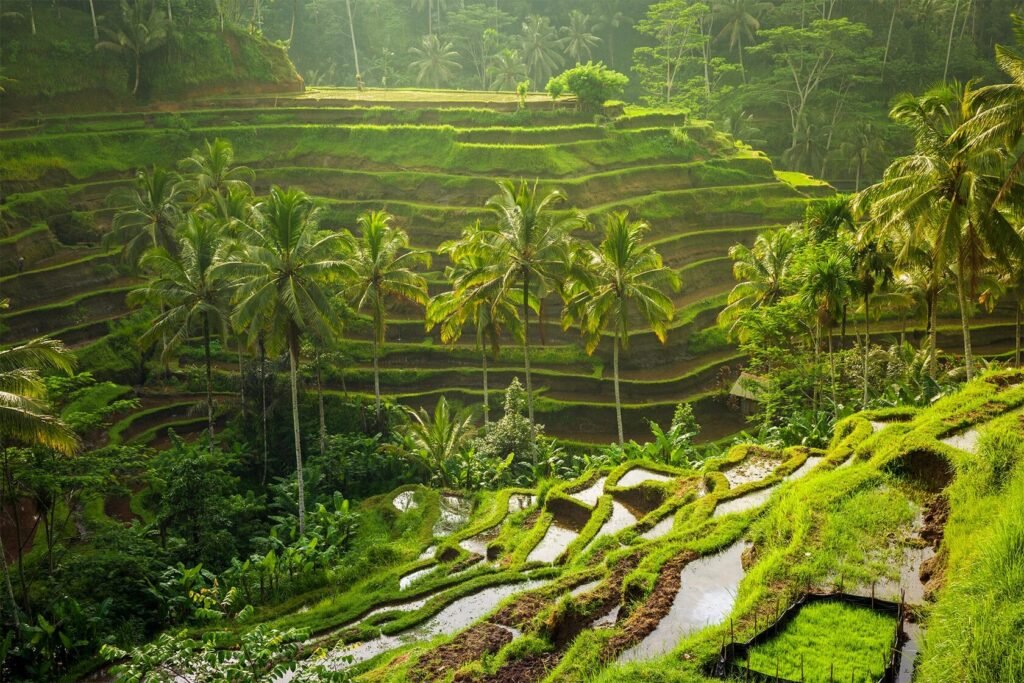
- Field Preparation: The fields are flooded, creating mirror-like surfaces that reflect the sky.
- Plowing: Using buffaloes, the fields are turned into a muddy mass.
- Rice Planting: Seedlings are grown separately and then transplanted manually, with three shoots planted in each hole.
- Growth: The fields turn emerald green and later golden as the rice matures.
- Harvesting: The ears of rice are cut with sickles, dried, and threshed. In the final stage, ducks are released to clean the fields by eating insects and leftover grains.
Each stage is accompanied by rituals and ceremonies, from blessing the fields with holy water to festive processions during the harvest.
What to See
- Viewpoints: Several platforms at the top of the terraces offer breathtaking views.
- Bamboo Bridges: These connect the terraces, making it easy to move between levels.
- Landscapes: Depending on the season, the terraces transform into reflective surfaces, emerald slopes, or golden fields.
- Local Villages: Surrounding the terraces are Balinese villages where traditional ways of life are still preserved.
Things to Do
- Walking: Explore the terraces on foot, enjoying the nature and tranquility.
- Photoshoots: This spot is popular among photographers – the vibrant landscapes and mirror-like terraces are perfect for capturing.
- Visiting Cafes: There are restaurants on the terraces with views of the rice fields. Try local dishes or Luwak coffee.
- Buying Souvenirs: Along the road to the terraces, you’ll find many shops selling carved items, paintings, and handmade jewelry.
Useful Information
- Opening Hours: The terraces are open 24/7, but it’s best to visit in the morning or near sunset.
- Entrance Fee: Usually 15,000–30,000 IDR per person.
- What to Bring: Comfortable shoes, a hat, sunscreen, and a camera for photos.
How to Get There
The terraces are just a 30-minute drive from Ubud. You can reach them by taxi, scooter, or with a guide as part of a tour. The route passes through scenic rice fields and villages, making the trip even more enjoyable.
Tegallalang is a place where ancient traditions, natural beauty, and unique culture come together in harmony. Here you can not only enjoy the views but also learn more about the life and daily work of Balinese farmers.
Tegallalang Rice Terraces are located here