

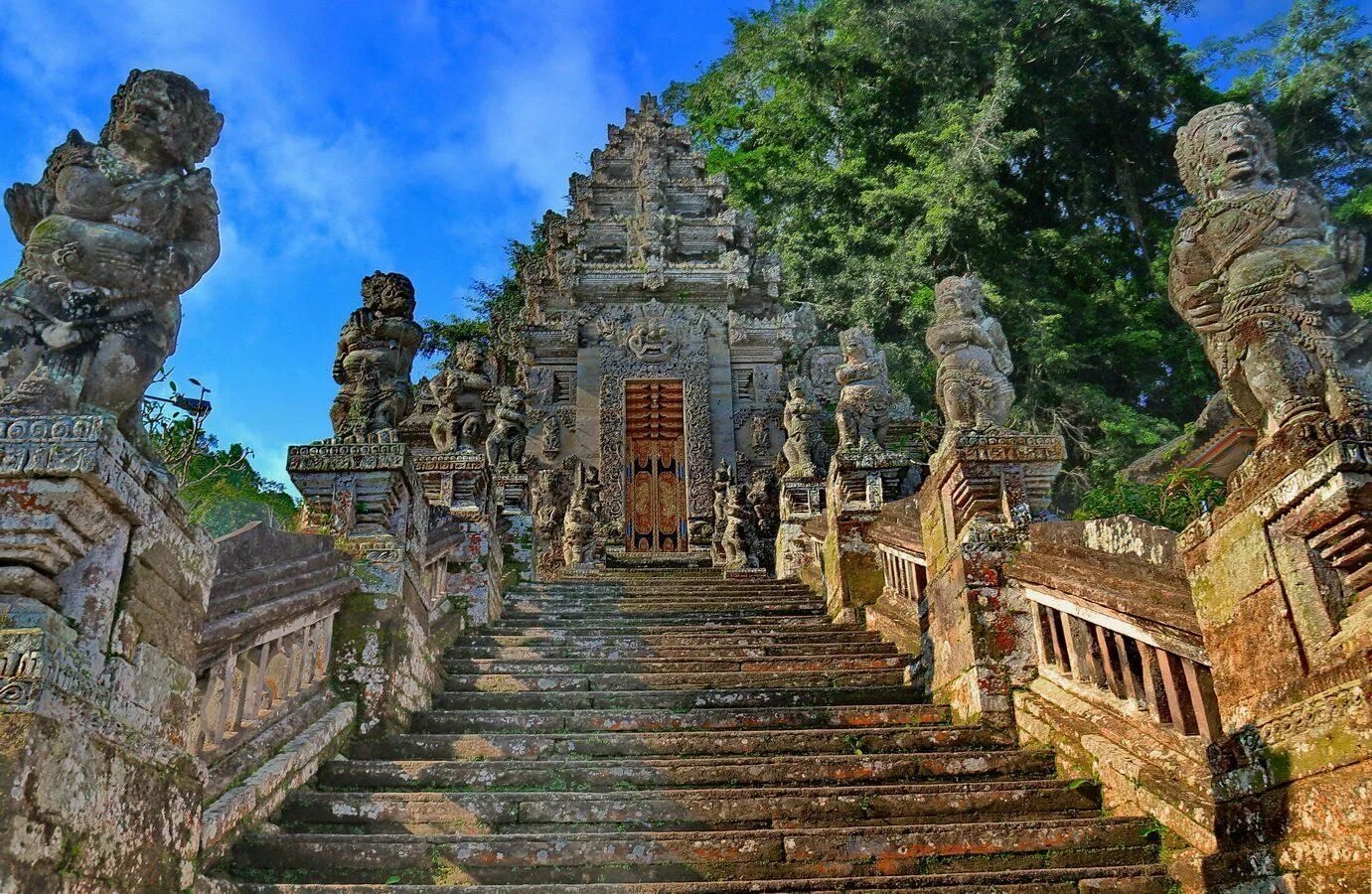
Pura Kehen Temple is located in Bangli Regency and is one of the most revered sanctuaries in Bali. Although it is sometimes compared to Pura Besakih, this is more of a metaphorical comparison, as the temple has its own unique features and atmosphere.
Location and general layout
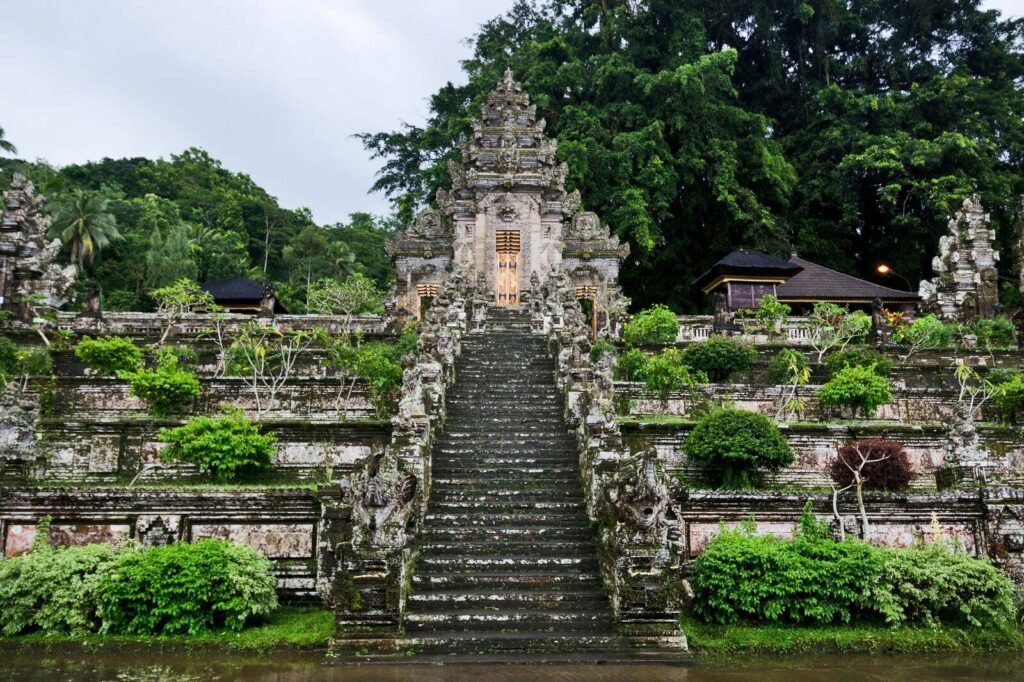
Pura Kehen sits at the foot of a high green hill. The complex consists of eight terraces that gradually ascend upward. The first five terraces are located outside the main sanctuary, their bases made of stone and decorated with shrubs and palm trees. The upper three terraces are situated within the temple and hold special symbolic meaning.
The three inner mandalas
- Outer Mandala (Jaba Pisan)This terrace symbolizes the human world. Here, pilgrims gather, socialize, enjoy music, and watch ritual dances.
- Middle Mandala (Jaba Tengah)A transitional level where offerings are prepared and arrangements for prayers take place.
- Inner Mandala (Jero)The sacred space, symbolizing the world of the gods. It is intended for prayer and holy ceremonies.
Features of the outer mandala
The outer mandala has three entrances: one central and two side gates.
- The central gate is in the form of a paduraksa, which is a distinctive feature of Pura Kehen. Such gates are usually reserved for inner sanctuaries. They are decorated with intricate stone carvings depicting heroes of Hindu epics and symbolic figures.
- Above the gate sits the head of Bhoma, the son of Vishnu and the earth goddess Dewi Pertiwi.
- A banyan tree over 400 years old grows in this courtyard. It is considered sacred, and any damage to its branches is seen as a bad omen.
Middle mandala
This terrace contains several pavilions (bale) for pilgrims, priests, and for the preparation of offerings. The stone gate Candi Bentar connects the middle mandala with the inner one.
Inner mandala
The most sacred part of the temple.
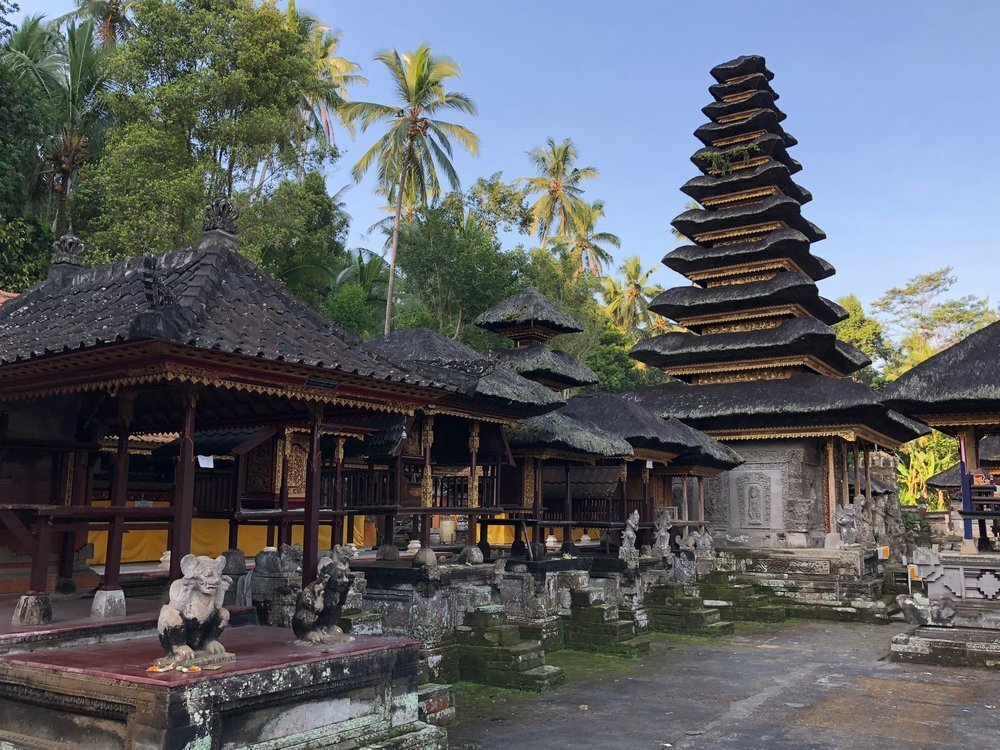
- An 11-tiered meru pagoda, roofed with black palm leaves, is considered the earthly dwelling place of the gods.
- The Padmasana (lotus throne) is the central altar symbolizing the Universe. It is crafted in the form of a turtle supporting the earth, entwined by two serpents.
- Bas-reliefs on the sides depict Shiva, Ganesha, and Durga.
- Sacred texts are preserved here, and the main religious ceremonies are conducted in this space.
Panoramic views
From the upper terrace of the temple, visitors can enjoy views of villages, rice terraces, and tropical hills, making Pura Kehen not only a spiritual but also an aesthetic destination.
Pura Kehen Temple: History, the Cult of Brahma, and Its Role
Dedication to Brahma
Pura Kehen is one of the few temples in Bali dedicated to Brahma, the creator of the universe. The cult of this god, who is part of the Trimurti, has long lost its popularity in Hinduism. Worship of Brahma is limited by a number of mythological reasons associated with curses imposed by Shiva or the sage Bhiru. However, prayers to Brahma are present in many rituals, and his image can be seen in temples such as Pura Kehen.
Brahma in Hinduism
- Origin: According to different myths, Brahma appeared from a lotus that grew from the navel of Vishnu, or from a golden cosmic egg created by Vishnu’s seed.
- Image: The god is depicted with four heads and arms. In his hands he holds a scepter, a water vessel, prayer beads, and the book of the Vedas. Unlike other gods of the Trimurti, Brahma has no weapons.
Religious Ceremonies
Important ceremonies are regularly held on the temple grounds:
- Piodalan: The annual celebration of the ninth full moon.
- Keliwon Sinta: Related to calendar coincidences.
- Ngusaba: Held once every several years with prayers for the fertility of the land.
- Ceremonies in honor of Saraswati, Purnama, and other deities.
Other Roles of the Temple
Pura Kehen is not only a religious center but also an important place for the local community:
- Kings and officials took oaths and performed rituals here.
- The temple serves an educational role, teaching prayers, rituals, traditional dances, and music.
- It is a gathering place for social and community events.
- It attracts tourists, helping the region’s economy to develop.
Historical Information
- Megalithic era: A shrine existed at this site since ancient times, as evidenced by sacred stones and terraces.
- Ancient documents:
- The first document (882–914 AD) mentions the temple as “Hyang Karimana” or “Hyang Api” – “temple of fire.”
- The second document (1016–1049 AD) links it to royal officials of the Udayana dynasty.
- The third document (around 1204 AD) mentions the name “Hyang Kehen” for the first time.
Pura Kehen remains an important spiritual and cultural center, reflecting the ancient history and religious traditions of Bali.
Pura Kehen Temple is located here