

Gunung Kawi, also known as Pura Gunung Kawi or Gunung Kawi Temple, is a unique temple complex and royal burial site. This ancient architectural monument is located in the village of Tampaksiring, just 13 kilometers from Ubud.
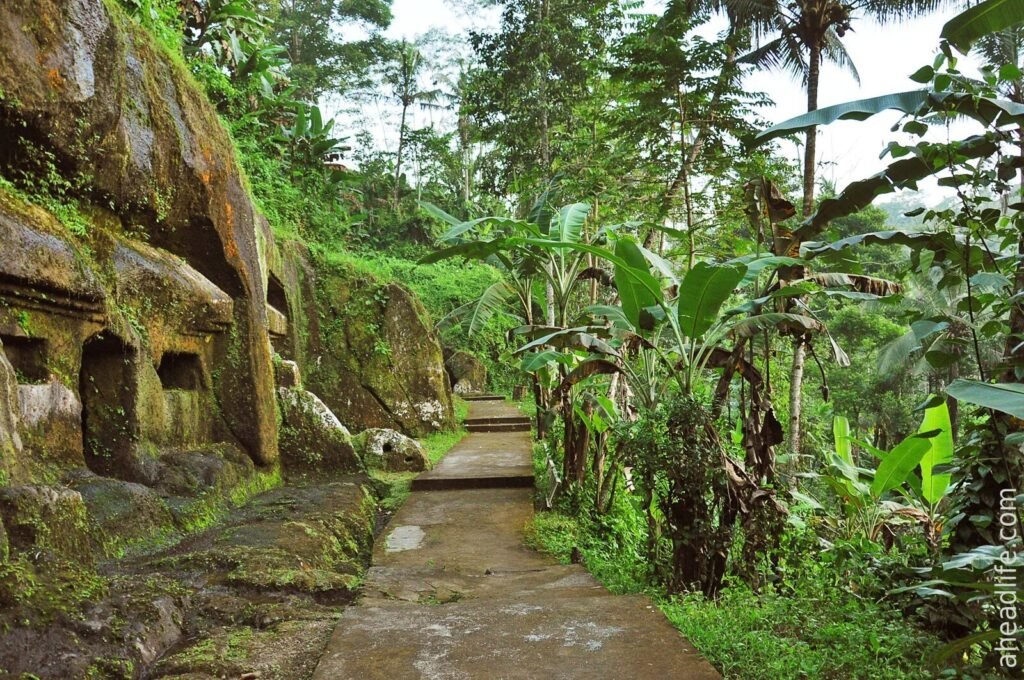
unung Kawi is set in the picturesque Pakerisan River Gorge (Tukad Pakerisan). To reach the temple, visitors must descend more than 300 steps through rice terraces and tunnels leading to a rectangular passage carved into the rock.
The complex is conventionally divided into three main zones:
- The tombs of King Anak Wungsu and his family.
- The Hindu Gunung Kawi Temple.
- Buddhist and monastic hermitages.
The royal tombs
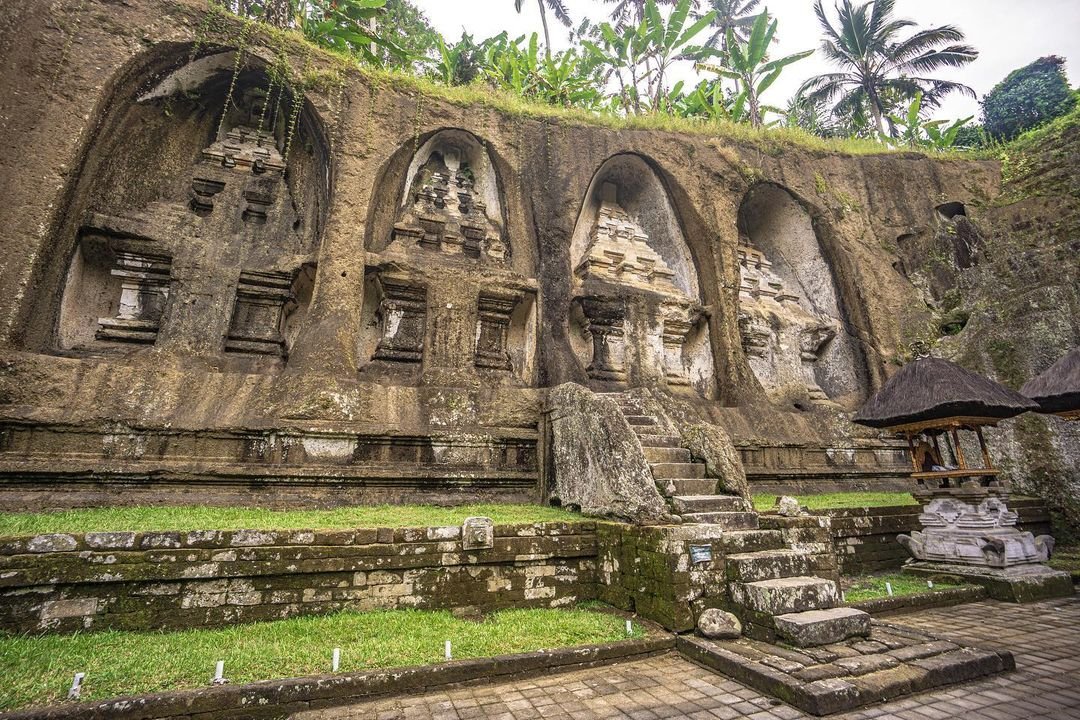
The complex contains 10 tombs (candi), each 7–8 meters high. These monumental memorials are carved into the cliffs and decorated with bas-reliefs resembling funerary towers.
The tombs are divided into two groups:
- Eastern bank of the river: Here are the first five tombs, known as “false” tombs since they contain no remains. They are dedicated to King Anak Wungsu, his parents (Udayana and Mahendradatta), and his brothers (Airlangga and Marakata). The central tomb bears the inscription Haji Lumahing Jalu, which translates as “the king built a temple here.”
- Western bank of the river: The remaining five tombs, known as the “true” tombs, were intended for the king’s wives and concubines. One of them, called Griya Pedanda, is dedicated to Anak Wungsu’s minister, who held a high rank at court.
The Hindu temple
The Gunung Kawi Temple is located on the western side of the river. Its architectural features include the traditional Balinese split gateway candi bentar, which serves as the temple entrance.
The temple consists of two courtyards:
- Outer courtyard: Contains utility buildings and staff areas.
- Inner courtyard: The central part of the temple, open to tourists. It includes an altar, statues of Hindu deities, pavilions, and a koi pond fed by sacred springs.
Buddhist and monastic hermitages
The caves carved into the cliffs beneath the tombs were used by Buddhist monks for meditation. There are also stone hermitages for Hindu priests, made from monolithic rock. Visitors are allowed to enter these hermitages only barefoot, as a sign of respect for the sacred site.
Walks and surroundings
Tourists can walk along paths leading to a waterfall, where bathing is believed to bring blessings and purification. Along the way, visitors can also enjoy views of the rice terraces and jungle surrounding the temple complex.
Historical significance
The complex was built around 1080 AD during the reign of the Udayana dynasty. The architecture of the candiresembles Javanese mausoleums, linked to the origin of Anak Wungsu’s mother. However, Balinese candi are unique in being carved directly into the rock with no internal space.
Tips for visiting
- Dress code: A sarong is required (available for rent at the entrance).
- Best time to visit: Early morning, to avoid heat and crowds.
- Recommended duration: Allow at least 1.5–2 hours.
Gunung Kawi is not just an ancient monument but a place where religious traditions merge with natural beauty. Visiting it leaves a lasting impression thanks to its unique atmosphere, history, and landscapes.
Gunung Kawi Sebatu
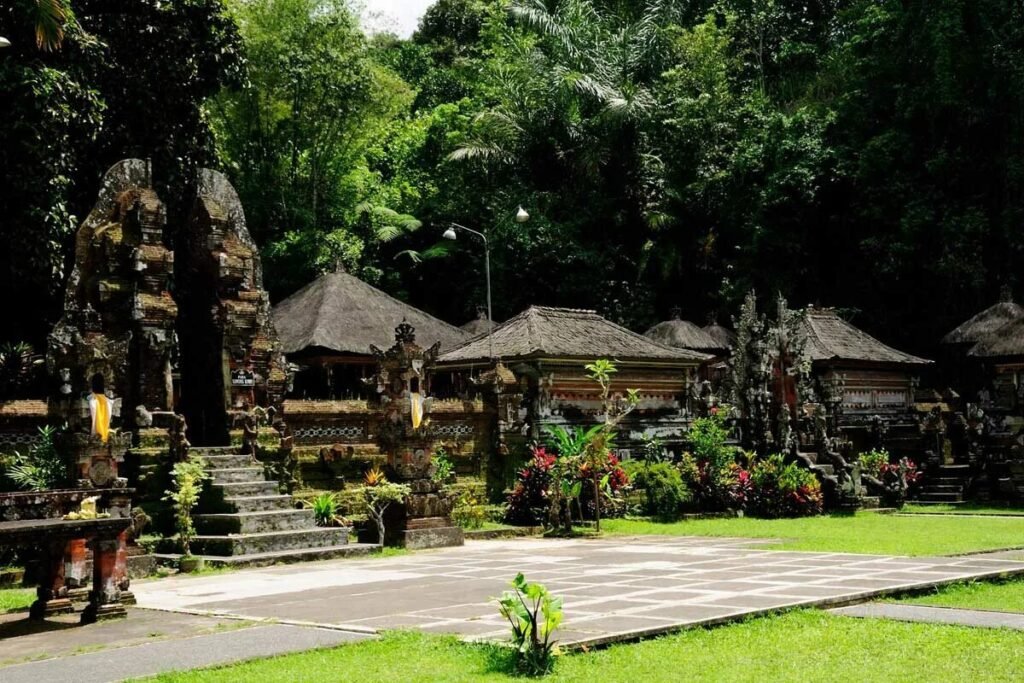
Gunung Kawi Sebatu is a cozy temple complex located among rice terraces and scenic roads in the village of Sebatu, not far from Ubud. The complex is famous for its tranquil atmosphere, peace, and serenity, making it an excellent place for those seeking solitude and harmony.
Main features of the temple
- Pond with colorful koi fishAt the center of the complex lies a large pond filled with colorful koi fish. Visitors can feed them by purchasing food on-site. Koi are considered symbols of luck and prosperity, and many visitors view feeding them as a ritual for attracting well-being.
- Bird cagesThe complex also houses cages with various birds. Guests can not only observe them but also interact with them — some birds can even mimic words. This creates a special atmosphere of living connection with nature.
- Sacred springs and bathing poolsThe temple is renowned for its springs with crystal-clear water. Anyone is welcome to wash or bathe in these pools. Balinese people believe that the water has purifying and healing properties. Many visitors come here for a cleansing ritual, which is said to relieve stress, remove negativity, and restore inner balance.
- Padmasana ThroneOne of the main highlights is the Padmasana Throne, dedicated to the god Vishnu. It stands in the middle of the water and appears to float above the surface, symbolizing divine presence. The Padmasana is adorned with intricate carvings and is considered a sacred spot.
- Lush greeneryThe temple is surrounded by dense greenery, with numerous trees, flowering bushes, and other plants. The serene environment invites meditation, leisurely walks, and spiritual practices.
Atmosphere and uniqueness
Gunung Kawi Sebatu is relatively unknown among tourists, which means it is rarely crowded. The tranquility and calmness that reign here allow visitors to enjoy nature, history, and the religious significance of the temple without hustle and noise.
Useful information for visiting
- Dress code: Wearing a sarong is mandatory before entering (available for rent at the entrance).
- Best time to visit: Early morning or late afternoon to avoid the heat.
- Recommended duration: 1–1.5 hours.
Gunung Kawi Sebatu is a place where nature, religion, and architecture come together in an extraordinary way. A visit to this temple offers unforgettable impressions and a chance to immerse yourself in an atmosphere of peace and harmony.
The area between the sacred Pakerisan and Petanu rivers in Bali has long been shrouded in myths and legends. These places are not only naturally beautiful but also deeply connected to the island’s history and spirituality.
Origin of the rivers and their legends
The Pakerisan River, in Balinese, means “Kris River” — named after the sacred ceremonial dagger resembling a double-edged sword. The second river, Petanu, is known as the “cursed river.”
One legend links the origins of these rivers to a battle between the god Indra and the demigod Maya Danawa. During the fight, Maya Danawa struck the ground with his staff, creating the Petanu River, but he cursed it. Suffering from thirst, the locals prayed to Indra for help. In response, he created a holy spring, from which the Pakerisan River began to flow. Today, the Tirta Empul temple stands at the site of this spring.
However, another version of the legend exists. According to it, the holy spring was created not at Tirta Empul, but at the Gunung Kawi Sebatu temple. To this day, there is no definitive proof supporting either version, so both sites are considered sacred and are revered by the island’s inhabitants.
History of Gunung Kawi
The Gunung Kawi temple and tombs were discovered in 1920 by a Dutch archaeologist, whose name has been lost to history. At the time of discovery, the temple was inside a rock cave destroyed by an earthquake. Studies have shown that the structures date back to the late 11th century, with the exact construction year determined as 1080.
Debates about the tombs’ creation and purpose
There are two main theories regarding the tombs’ origins:
- The first theory claims the burials date back to the 10th century, during the reign of King Udayana, father of Anake Wungsu.
- The second theory suggests that the tombs were built in the 11th century by order of King Anake Wungsu in honor of his parents.
However, archaeologists still cannot confirm whether members of the royal family were actually buried here. Religious restrictions prohibit dismantling the structures for further research.
Contradictions with Hindu traditions
Hindu tradition prescribes cremation as the only proper method of burial, believing that a cremated soul reincarnates more quickly. After cremation, ashes are typically scattered over the ocean. Based on this, many scholars believe the Gunung Kawi tombs are symbolic and do not contain remains.
Legends of Gunung Kawi’s creation
One legend says that the bas-reliefs were carved overnight by the demon Kebo Iwa with his nails. According to the story, he either carried out King Anake Wungsu’s orders or simply entertained himself.
Another myth claims that a temple was originally built at the site, and the tombs appeared later. The complex gained its sacred significance thanks to a holy spring, said to have been given by the god Vishnu in exchange for a river poisoned by the blood of a demon.
Mysteries of Gunung Kawi
The Gunung Kawi complex remains a place full of enigmas and unanswered questions. The legends surrounding it intertwine reality and myth, and its true history remains forever shrouded in mystery.
Gunung Kawi Temple is located here