

Brahmavihara Arama Temple is located in the northern part of Bali, not far from the city of Singaraja. It is one of the few Buddhist temples on the island, known for its unique architecture, tranquil atmosphere, and peaceful setting, making it an ideal place for meditation.
Brahmavihara Arama Temple is located in the northern part of Bali, not far from the city of Singaraja. It is one of the few Buddhist temples on the island, known for its unique architecture, tranquil atmosphere, and peaceful setting, making it an ideal place for meditation.
Although Buddhism plays only a minor role in Balinese religious life, every Buddhist temple here is considered a true treasure. Brahmavihara Arama is the largest Buddhist temple in Bali, situated near Singaraja in the Banjar area. Built on a hilltop, the temple has become a remarkable landmark and a place of serenity and meditation.
Location and features
- Mountain setting: The temple stands on the hill of Tegeha Hamlet, offering scenic views of the surrounding landscapes and the sea. The elevated location was chosen deliberately, as Buddhist temples are traditionally built on high ground.
- Silence and seclusion: Thanks to its distance from popular tourist routes, the atmosphere here is calm and unhurried. There are no crowds, vendors, or noisy guides, allowing visitors to fully enjoy the sense of harmony.
History
- Foundation: The temple was established in 1973 under the guidance of the respected Buddhist monk Girirakkhito Mahathera. Although relatively young, its spiritual roots go back to the 7th–8th centuries when Buddhism first began to spread in Bali.
- Forgotten tradition: During Dutch colonization, many religious customs were lost, and it was only in the second half of the 20th century, after independence, that Buddhism began to revive.
- Trials: In 1976, an earthquake partially destroyed the temple and claimed five lives. However, thanks to the efforts of Girirakkhito Mahathera and local residents, the sanctuary was restored.
Architecture
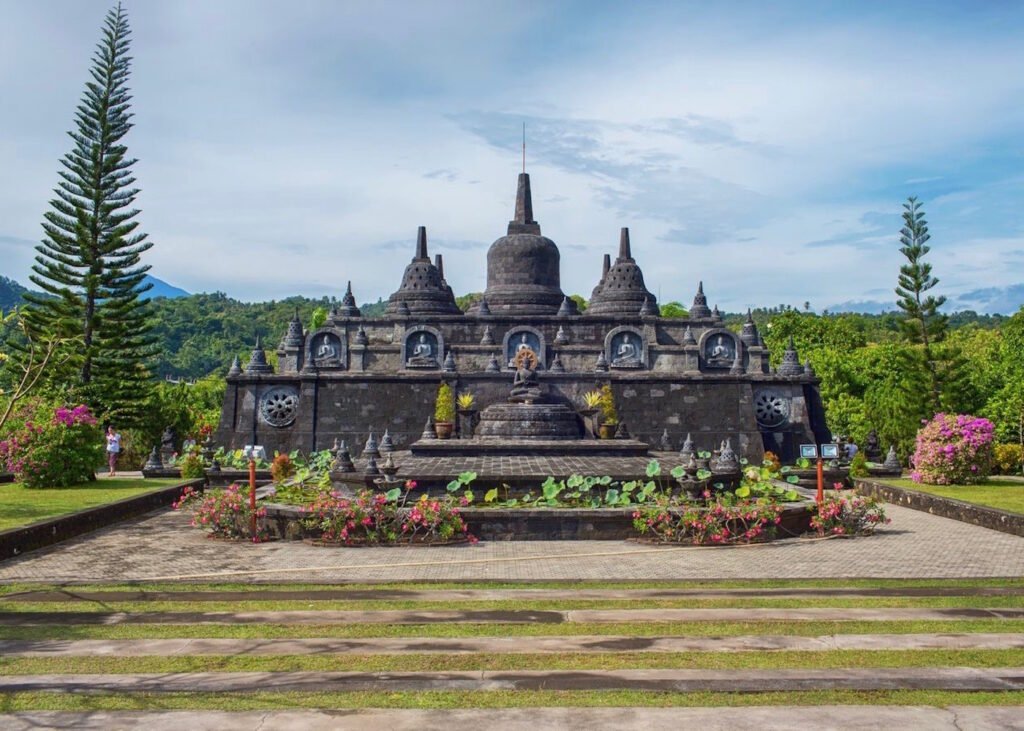
- Miniature Borobudur: The temple’s design was inspired by the world-famous Borobudur Temple on Java, a UNESCO World Heritage site.
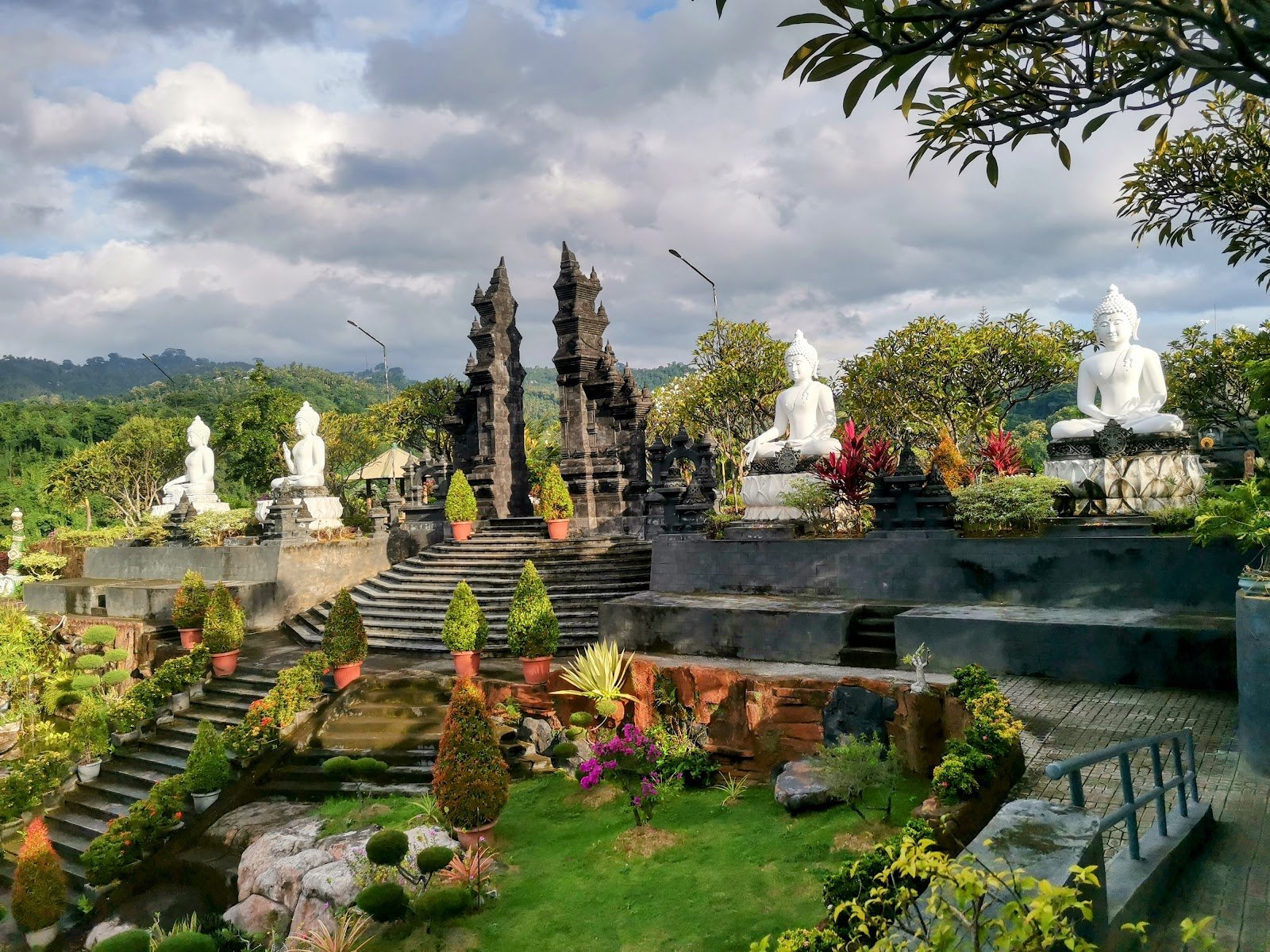
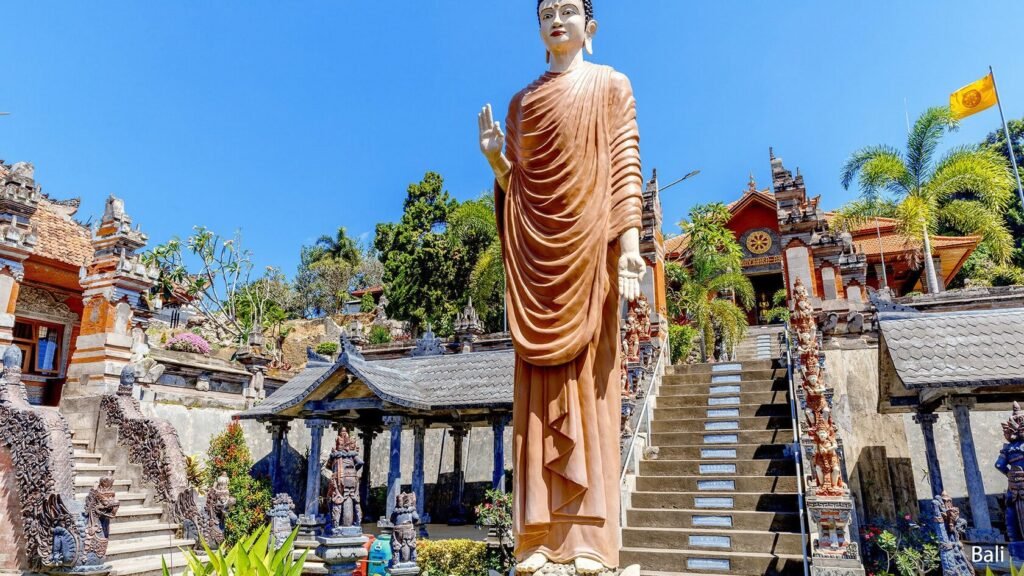
- Buddhist statues: The grounds are adorned with numerous statues of Buddha, both golden and stone, as well as traditional stupas.
- Hindu elements: Surprisingly, the temple also features statues of Hindu deities such as Nagas, reflecting Bali’s cultural and religious synthesis.
- Stone carvings: Like many Balinese temples, Brahmavihara Arama is decorated with intricate stone carvings that add refinement and elegance.
Meditation and spiritual life
- Meditation practices: The temple hosts a meditation center that offers retreats. Programs include lectures by teachers, group and individual meditation sessions, as well as solitary walks through the scenic grounds.
- Peace for all: Even tourists with no prior experience can enjoy the calm atmosphere, take a quiet walk, or try simple meditation practices on their own.
What attracts visitors
- Atmosphere of seclusion – The absence of crowds allows visitors to experience the true spirit of the temple.
- Unique architecture – A fusion of Buddhist and Hindu elements creates a distinctive style.
- Beautiful nature – Surrounded by gardens, trees, and ocean views, the temple grounds feel like a paradise retreat.
- Historical value – A place that connects visitors with the history of Buddhism in Bali and its enduring presence over time.
Brahmavihara Arama Temple is more than just a religious sanctuary. It is a place where culture, history, and spirituality intertwine in harmony. Its unique atmosphere and architecture make it a must-visit destination for those seeking peace, serenity, and inspiration.
The temple is divided into five distinctive complexes, each with its own purpose and meaning. Every corner reflects elements of Buddhist culture and the beauty of the surrounding nature.
- Uposatha GaraLocated on the western side of the temple on a hill. At the center stands a statue of Buddha in the lotus position, symbolizing enlightenment. The statue is surrounded by a lotus pond, and behind it, the wall depicts the scene of Buddha’s birth. This courtyard is dedicated to monks taking their vows and is often compared to Borobudur for its architectural resemblance.
- DharmasalaSituated in the eastern part of the temple. This spacious hall is used for lectures, sermons, and group meditation sessions. Its calm atmosphere and decorated walls create the perfect setting for spiritual learning and reflection.
- StupaLocated in the northwestern part of the temple. Built in the shape of a concrete bell adorned with Buddhist reliefs, the stupa holds sacred relics inside. It symbolizes the spiritual path and reverence for holy objects.
- Bodhi TreeFound in the southwestern part of the temple. Decorated with reliefs, the tree represents eternal perfection and spiritual growth. It is a popular spot for meditation, especially during Buddhist festivals.
- KutiThese are rooms for monks and their students. Here, they engage in private practices, solitary meditation, and spiritual learning.
The temple impresses visitors not only with its spiritual atmosphere but also with its natural beauty. From its terraces, one can enjoy breathtaking panoramas of the ocean, rice fields, and lush green hills. Within the grounds, ponds bloom with soft purple and pink lotuses, cashew trees bear bright fruits, and a variety of flowering plants add vibrancy and charm to the sacred space.
Brahmavihara Arama Temple is not only a site for Buddhist rituals but also a place for seeking peace, inspiration, and unity with nature. It is an ideal destination for both spiritual practice and leisurely walks while enjoying the beauty of the surrounding world.
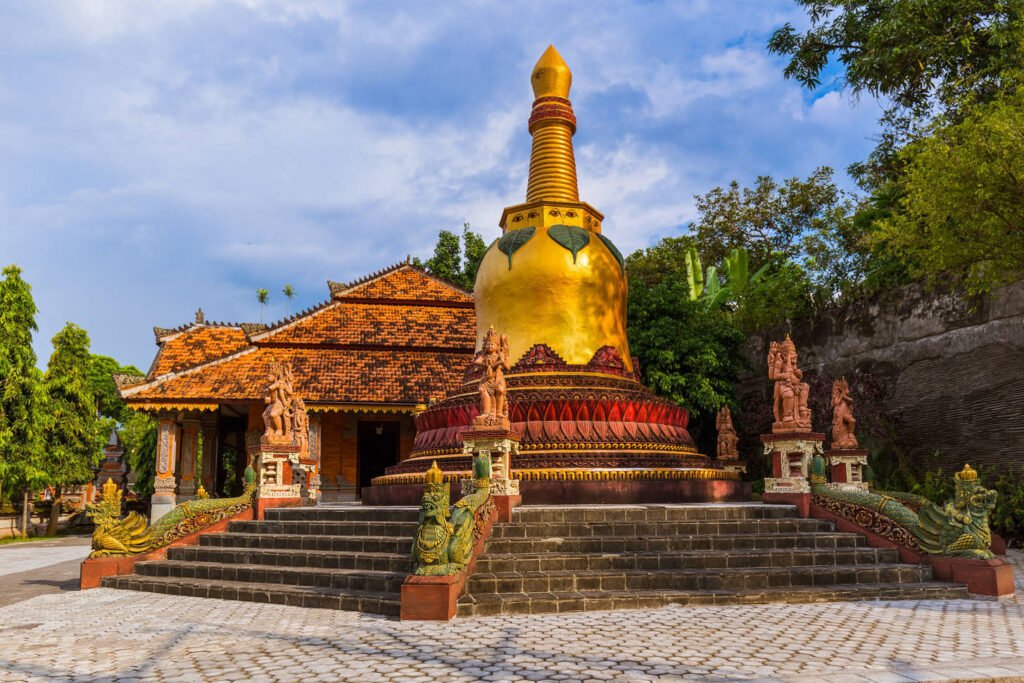
Brahmavihara Arama Temple is located here