Pura Taman Ayun, also known as Taman Ayun Mengwi Temple, is one of Bali’s most exquisite temples. It is located 17 km from Denpasar and 8 km from Ubud, near the village of Mengwi. The temple’s name translates as “Beautiful Garden,” perfectly reflecting its architecture and surrounding landscape.
Architecture and structure
The temple occupies an area 100 meters long and 250 meters wide, divided into one outer courtyard and three inner courtyards. Each courtyard is enclosed by stone walls and decorated with unique gates.
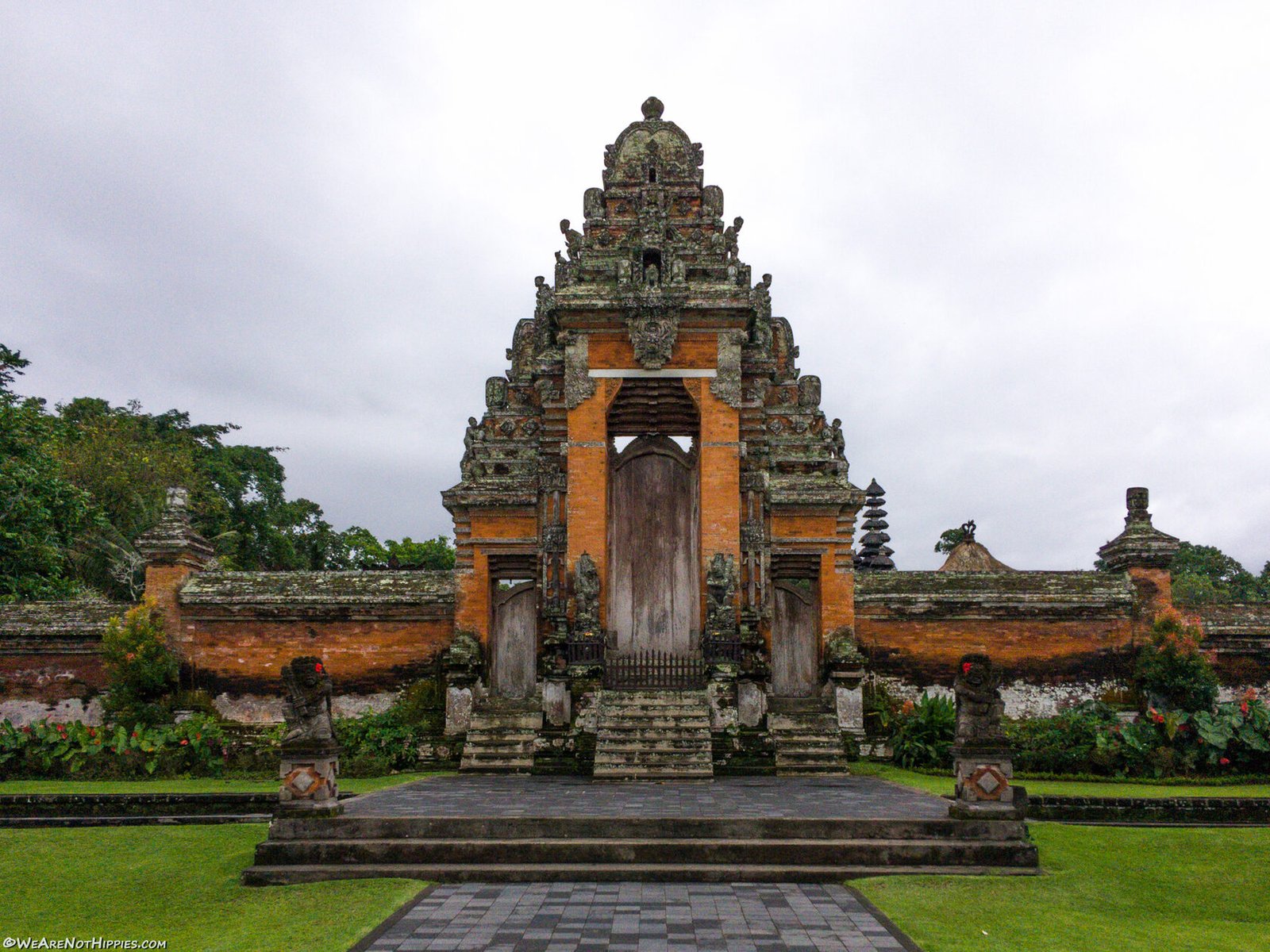
The first feature that draws visitors’ attention is the lotus pond surrounding the temple. Entry to the temple grounds is only possible via a bridge leading to the Candi Bentar gates. These split gates resemble a divided mountain, symbolizing the Balinese concept of duality and balance between light and dark forces.
The three courtyards
- Jaba Pura — Outer Courtyard
Passing through the Candi Bentar gates, you enter the first courtyard. This largest area represents the human world.
- Garden and park area: Trees and flowers grow here, including Plumeria, Magnolia, Cananga, and fruit trees such as mangosteen, durian, rambutan, and mango.
- Deva Nawa Sanga Fountain: Located at the center of the garden, the fountain has nine water streams symbolizing the nine Hindu gods who protect the cardinal directions.
- Following the path, you reach the Kori Agung gates, leading to the second courtyard.
- Jaba Tengah — Middle Courtyard
This courtyard represents the transition between the human and divine worlds. It includes:
- Bale-Kulkul Tower: An 8-meter-high wooden tower adorned with depictions of gods, used for gathering people or announcing events.
- Bale-Lodji Pavilion: A place for preparing priests and ceremonies. Today, local artists sell their paintings here.
- Bale-Pengubengan Pavilion: Its walls are decorated with patterns depicting the nine Hindu deities guarding the cardinal directions.
- Manusa Yadnya Museum: Founded in 1979, the museum illustrates Balinese Hindu rituals from birth to death.
- Jaba Jero — Inner Courtyard
The innermost courtyard is the most sacred, representing the world of the gods.
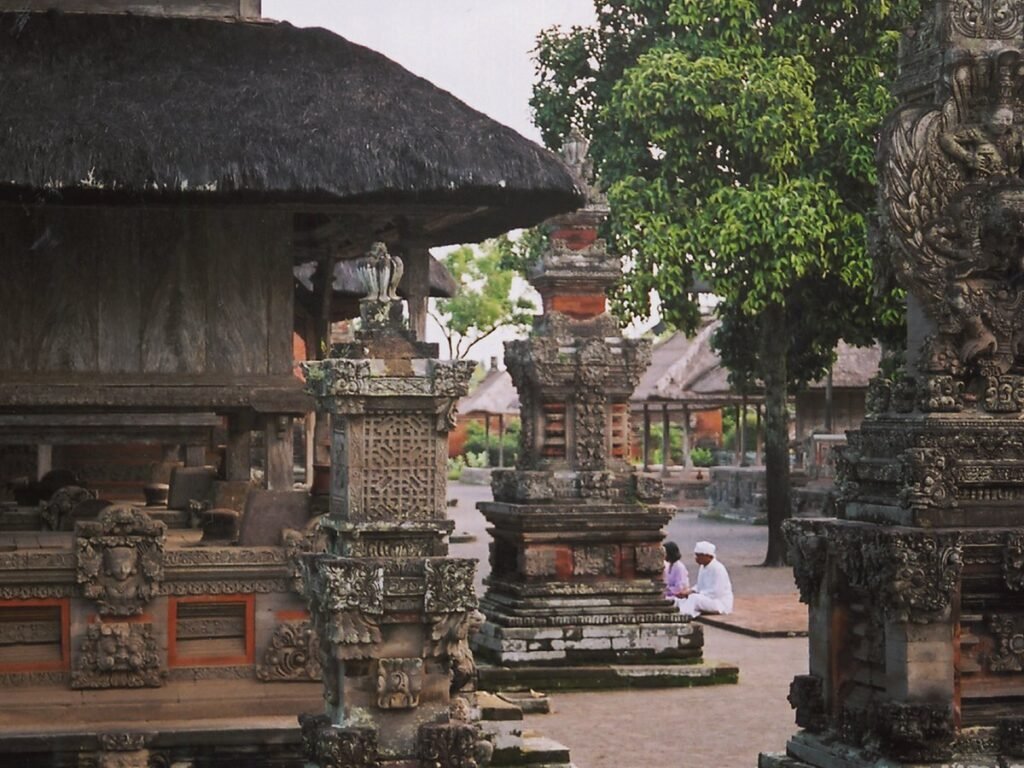
- Meru Towers: The courtyard contains 29-meter-high towers dedicated to gods, humans, or local mountains. These multi-tiered structures symbolize Mount Mahameru, the center of the spiritual and physical universe. Towers have 3, 5, 7, 9, or 11 tiers — sacred numbers in Hinduism.
- Stone sculptures and altars: Dedicated to Hindu gods and mythological creatures.
- Gates: Main gates open only during religious ceremonies, such as Odalan — the temple’s birthday celebration.
Features and symbolism
- Water channels: The pond surrounding the temple symbolizes protection from evil spirits.
- Trees and flowers: The landscape emphasizes harmony between humans and nature, reflecting the “Tri Hita Karana” philosophy — the balance between humans, nature, and gods.
- Sculptures and patterns: Depict mythological scenes and Hindu history.
Visitor information
- Dress code: Wearing a sarong is mandatory (provided at the entrance).
- Best time to visit: Morning or evening to avoid heat and crowds.
- Guided tour: Recommended to better understand the temple’s symbolism.
Pura Taman Ayun Temple was built in 1634 by order of the raja of the Mengwi kingdom — I Gusti Agung Putu. It is referred to not only as the “Royal Temple” but also as Pura Kawiten, meaning “Family Temple.” This name reflects its historical role as a place where members of the royal family prayed and honored their ancestors as deities.
History of construction and architectural features
The temple was designed by a friend of the king, who was of Chinese descent. His influence is visible in the appearance of certain elements of the complex. For several centuries, Taman Ayun remained the largest structure in the kingdom and a symbol of its spiritual and political authority.
The royal family took care of the temple, maintaining it in perfect condition. However, in 1890, during a conflict with the ruler of Badung, the family fled eastward, leaving the temple unattended.
Restoration after damages
When part of the royal family returned to Mengwi in 1911, restoration of the temple began. Yet in 1917, on Saturday, January 21, a strong earthquake struck Bali, destroying many structures of Taman Ayun.
Additionally, the temple suffered from eruptions of Mount Batur and Mount Agung in the mid-20th century. Over its history, it underwent several major restorations:
- 1937: First major reconstruction after the earthquake.
- 1949: Restoration work in the main hall of the temple.
- 1972: Second large-scale reconstruction.
- 1976: Completion of the full restoration of the complex.
Current state
Despite numerous restorations, Pura Taman Ayun has retained its authentic appearance. Bali’s humid climate contributed to moss covering the temple walls, adding an atmosphere of antiquity and mysticism.
Interesting facts
The temple is mentioned in the book by Indonesian history professor Henk Schulte Nordholt, The Balinese Dynasty: Hierarchy and Conflict in Negara Mengwi 1700–1940. His research focuses on the history and politics of Southeast Asia, including Bali.
Today, Taman Ayun remains not only a symbol of the Mengwi kingdom but also one of the most beautiful and visited temples on the island. Its harmony with nature and unique architecture make it an important cultural and religious landmark.
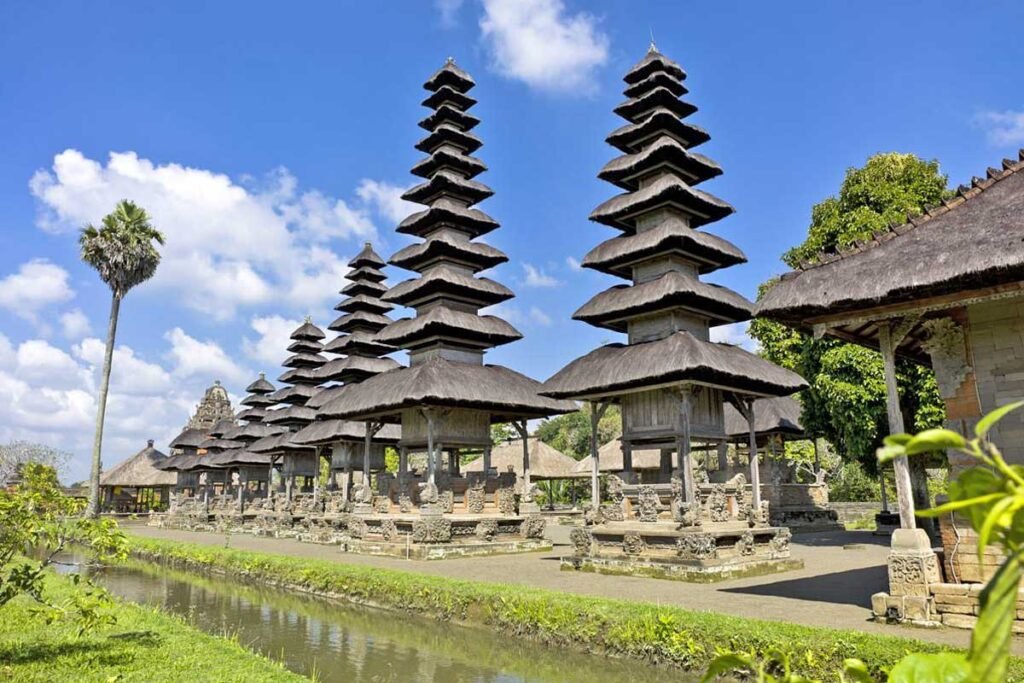
Taman Ayun Temple is here