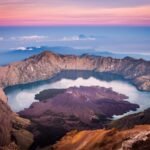
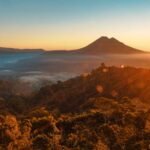
Agung (Gunung Agung) is an active volcano in the eastern part of Bali. It is the highest point on the island, with its summit reaching 3,142 meters above sea level.
Mount Agung – the majestic Mother Mountain of Bali
Agung is the sacred mountain of Bali, whose grandeur and power still inspire awe and reverence among both locals and visitors. The volcano symbolizes the god Shiva and is considered a representation of masculine energy.
Geography and history
The crater of Mount Agung measures 500 × 320 meters. Its summit rises to 3,014 meters above sea level and is almost completely devoid of vegetation. Majestic and unapproachable, the volcano is visible from nearly every point on the island.
The last devastating eruption occurred in 1963, claiming the lives of about 1,700 people and leaving a deep scar in the memory of the local population. Pyroclastic and mudflows destroyed tens of thousands of homes and temples. Even decades later, the consequences of that catastrophe remain visible on the slopes of the volcano.
In recent years, Agung has been relatively calm. However, in 2001–2002 volcanologists recorded an increase in temperature, which caused fires at its base. Today, Agung is considered conditionally dormant, but scientists continue to closely monitor its activity.
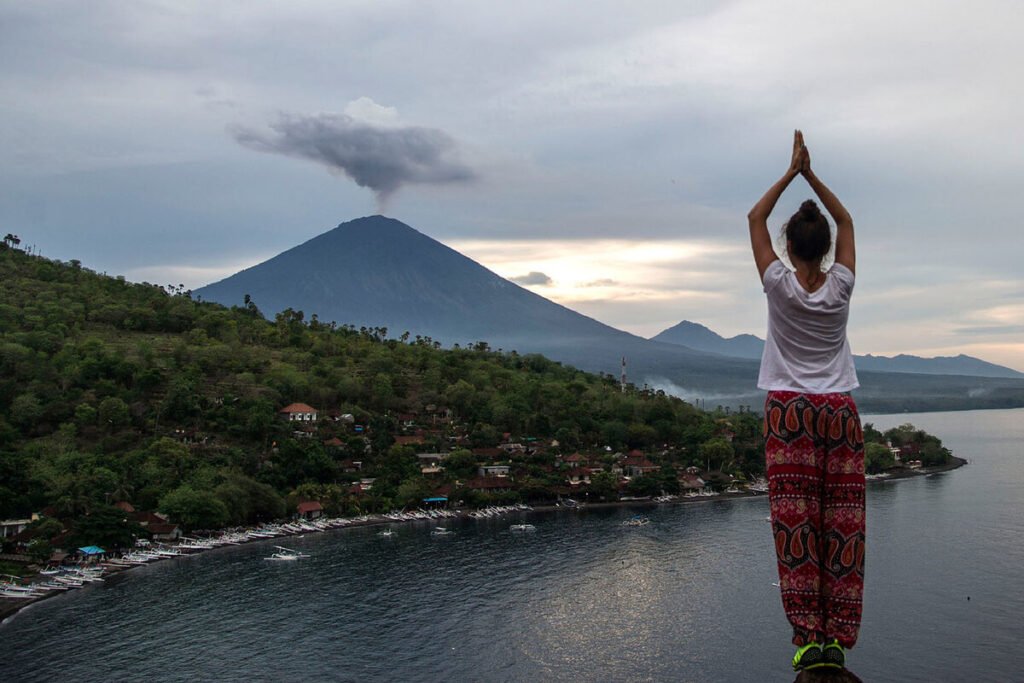
Legends and sacred significance
The name Agung in the local language means “Great Mountain” or “Mother Mountain.” According to legend, it was created by the gods, who made it their earthly residence. From the summit of Agung, the gods observed human life and sent the magical bird Garuda to the worthy, so that they could join them.
Balinese people continue to worship the volcano, believing it to be the dwelling place of the gods. All houses on the island are traditionally built so that their main part faces Mount Agung, and the tall bamboo poles (penjor) that decorate homes during festivals symbolize the power and curves of the volcano.
Climatic influence
Agung has a significant impact on the island’s climate. The western part of Bali is humid and lush with tropical vegetation, while the eastern regions are drier and harsher. The coastlines here are covered with black volcanic sand, which gives these places their unique character.
Climbing Mount Agung
Climbing Mount Agung is one of the most breathtaking adventures in Bali. From its summit, you can enjoy a stunning view of the island, and at sunrise, watch the sun illuminate the neighboring volcanoes Abang and Rinjani.
However, the ascent requires physical preparation. The trail begins in villages at the foot of the mountain and leads to the summit through tropical forests and rocky terrain. Solo climbs are strictly prohibited due to danger – the guidance of an experienced local guide is required. Guides not only ensure safety but also help carry luggage, share stories about the volcano’s history, and monitor the condition of the climbers.
Tips for tourists
- Equipment: comfortable shoes, warm clothing, flashlight, backpack with food and water.
- Duration of the climb: 4–6 hours to the summit, depending on the route.
- Best time to climb: early morning to catch the sunrise.
- Hazards: steep slopes, sudden weather changes, and risk of injury.
Interesting facts
• In 1963, the eruption of the volcano coincided with the Eka Dasa Rudra festival, which the Balinese perceived as a warning from the gods.
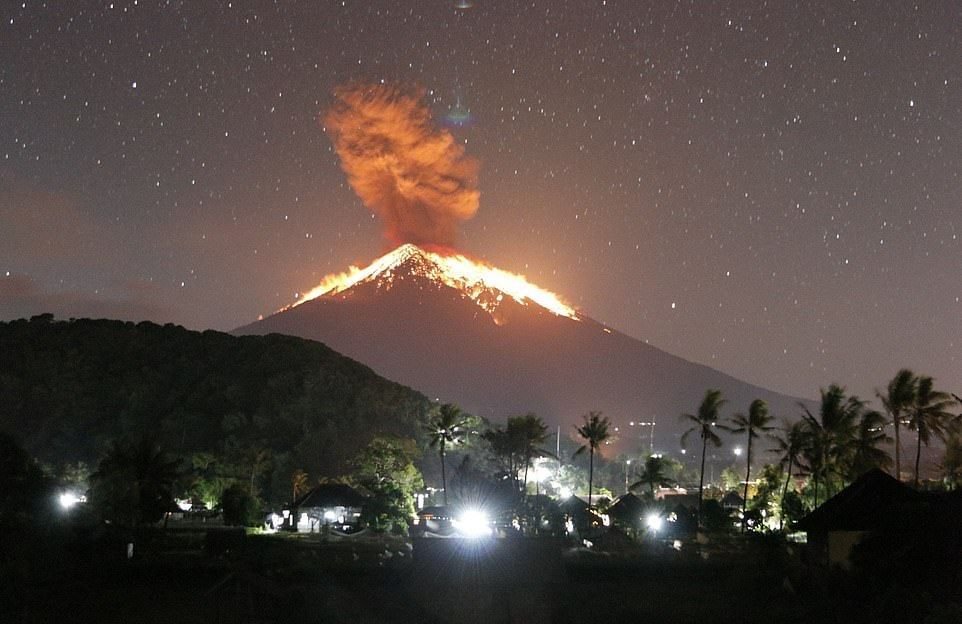
• In 2017, Agung became active again, releasing an ash column up to 4,000 meters high. This led to the evacuation of thousands of residents from nearby villages.
• The volcano is included in the list of active volcanoes in Indonesia and remains an important subject of scientific research.
Visiting Mount Agung is an opportunity to touch history, legends, and the power of nature. This volcano stays forever in the heart of everyone who has seen its grandeur even once.
Mount Agung is located here