Pura Luhur Lempuyang, or Lempuyang Temple, is considered one of the oldest and most revered temples on the island of Bali. It is part of the nine main sanctuaries known as Kayangan Jagat, which are believed to maintain the spiritual balance of the island.
Pura Luhur Lempuyang: a sacred complex in eastern Bali
Located in eastern Bali on the slopes of Mount Lempuyang, near Mount Agung, the temple complex consists of seven temples. The main sanctuary stands at an altitude of 1,058 meters above sea level and is reached by climbing more than 1,500 steps.
History of the temple
According to legend, this holy site existed more than 2,000 years ago, long before the arrival of Hinduism. Written sources suggest that the temple was officially established in the 11th century, with chronicles first mentioning it in 1072.
Around the same time, other mountain temples were built. Balinese tradition holds that the island’s peaks were formed from Mount Meru, a sacred mountain that split into several parts. The god Pasupati is said to have sent three of his children to Bali’s highest points to bring balance to the island. Temples were later built on Mount Batur, Mount Agung, and Mount Lempuyang.
Until the mid-20th century, Lempuyang Temple fell into neglect, with its shrines overgrown by dense vegetation and partially ruined. Restoration began in the 1960s, and the current structures are the result of reconstruction. Despite renovations, the temples have preserved their sacredness and grandeur.
Structure of the complex
The complex is divided into three main levels, each dedicated to a different deity:
- Lower level: dedicated to Brahma
- Middle level: dedicated to Vishnu
- Upper level: dedicated to Shiva
The seven temples of the complex are:
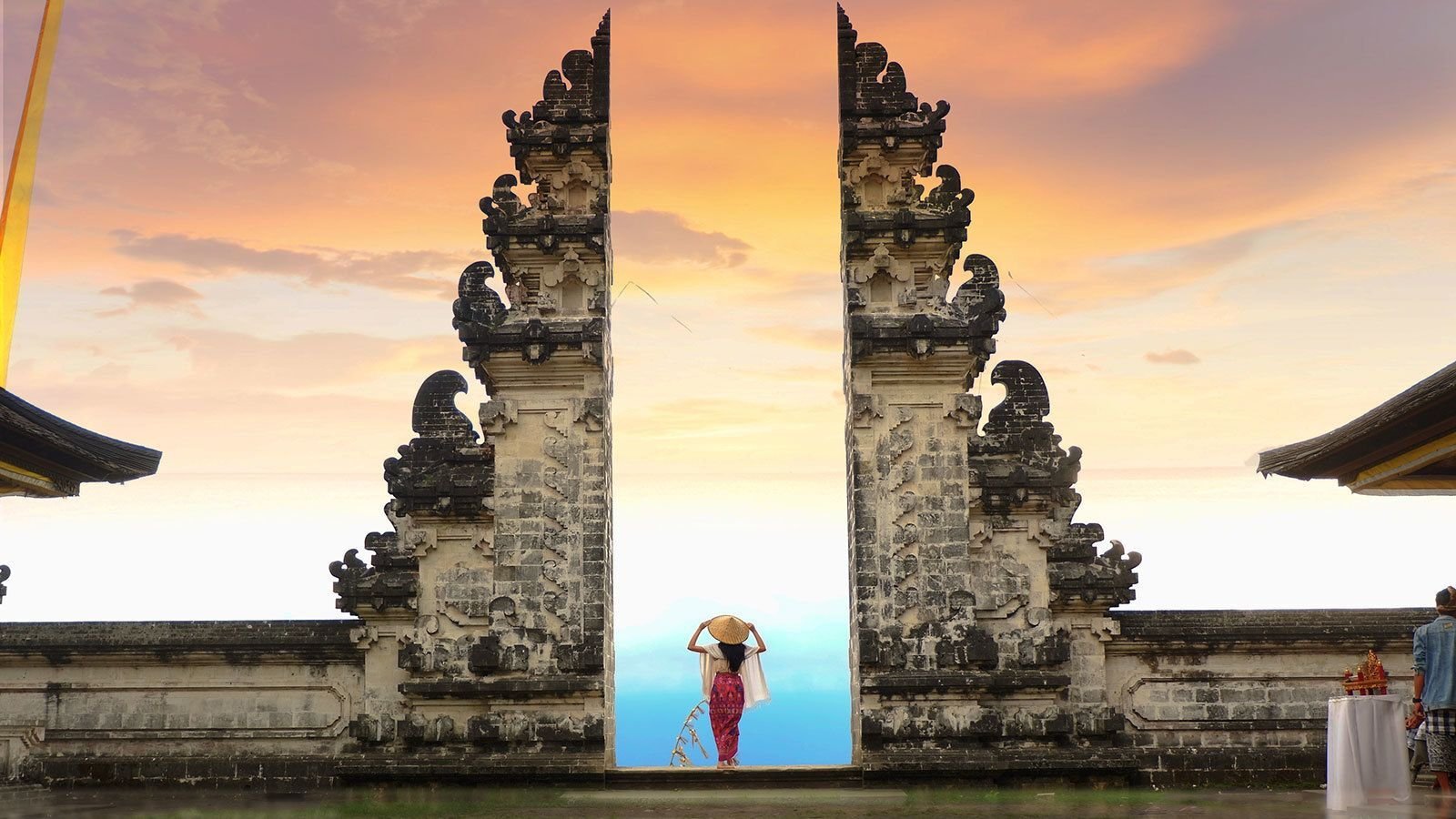
- Pura Penataran Agung Lempuyang – the most famous, marking the beginning of the ascent and home to the iconic “Gates of Heaven.”
- Pura Telaga Mas
- Pura Telaga Sawangan
- Pura Lempuyang Madya
- Pura Pucak Bisbis
- Pura Pasar Agung
- Pura Lempuyang Luhur – the main temple, located at the summit
Routes to the main sanctuary
Visitors can reach the uppermost temple via:
- Short route: a direct climb to the main temple, taking about 2–3 hours.
- Long route: passing through all seven temples, which takes 4–6 hours depending on pace and stamina.
There are also alternative paths and shortcuts along the way.
Spiritual significance and rituals
Climbing to Lempuyang is seen as a spiritual journey of purification for both body and soul. Visitors are expected to follow the rules:
- Wear a sarong (available for rent at the entrance).
- Show respect by avoiding loud noises and inappropriate behavior.
Tips for travelers
- Best time to visit: early morning, to avoid the heat and witness sunrise views.
- Physical preparation: the ascent is demanding, so be prepared for a workout.
- Essentials: bring water and light snacks.
- Photography: don’t miss the famous “Gates of Heaven” photo spot with Mount Agung in the background.
Why visit Lempuyang Temple
- Spiritual depth: one of Bali’s most important temples sustaining the island’s balance.
- Unforgettable views: sweeping vistas of Mount Agung, jungle, and ocean.
- Cultural immersion: an opportunity to connect with ancient traditions and Balinese Hindu beliefs.
Pura Luhur Lempuyang is a place where nature, history, and spirituality unite. Visiting this temple offers not only a physical challenge but also a profound cultural and spiritual experience.
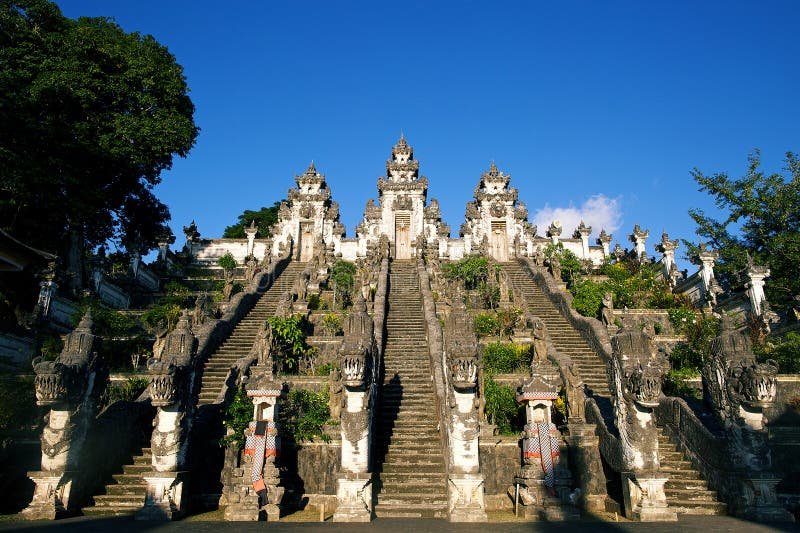
The full name of the Lempuyang Temple is Pura Sad Kahyangan Lempuyang Luhur.
The name of the temple has deep symbolic meaning. One of the most well-known interpretations is “Heavenly Dizziness,” where Luhur means “heavenly” and Lempuyang means “dizziness.” However, in the official guide of the Bali Department of Culture (1998 edition), the name is interpreted differently: Lampu is translated as “light” or “radiance,” and Hyang as “the deified spirit of the ancestors.” Thus, the overall meaning of the name is “the light of God, which shines brilliantly and illuminates everything around.”
Dedication of the temple
The temple is dedicated to Iswara (Dewa Iswara), the One God who, in Hindu philosophy, is considered the Creator of the Universe. He is also called Sang Hyang Widi Wasa, which can be translated as “the Almighty God.” Iswara is often depicted as a naked figure surrounded by tongues of fire, symbolizing creative energy.
In Balinese temples, Iswara is represented through Padmasana — lotus thrones symbolizing purity and harmony.
Features of Balinese Hinduism
The religious tradition of Bali, known as Agama Hindu Dharma, is a synthesis of Hinduism, Buddhism, and ancient local beliefs. It differs from classical Indian Hinduism by emphasizing a monotheistic concept and a local interpretation of philosophical ideas.
Key principles of Balinese Hinduism:
- One God: There is only one supreme God, from whom the entire world originates.
- Trimurti: The concept of the three main deities — Brahma (the Creator), Vishnu (the Preserver), and Shiva (the Destroyer). All are manifestations of the One God. The Trimurti maintain balance and govern the cycle of life, birth, and death.
- Atma (Soul): The universal principle of life and consciousness. The soul is immortal and transmigrates into new bodies in the process of reincarnation.
- Karma: The sum of human actions that determine future lives.
- Samsara: The endless cycle of birth, life, and death.
- Moksha: Liberation from samsara and the attainment of harmony with God.
Hinduism and state policy
After Indonesia gained independence in the mid-20th century, the state established the principle of freedom of religion. However, all recognized religions were required to be monotheistic. This led to a strengthening of the idea of the One God within Hinduism. Balinese Hinduism formally adapted to this requirement by focusing on the concept of Iswara as the One God.
Conclusion
The temple Pura Sad Kahyangan Lempuyang Luhur is not only a place of prayer but also a symbol of the profound philosophy of Balinese Hinduism. Its name and dedication to Iswara emphasize the unique interpretation of monotheism in the local religious tradition. This temple serves as a reminder of the harmony between humans, nature, and higher powers, which in Balinese culture are inseparably connected.
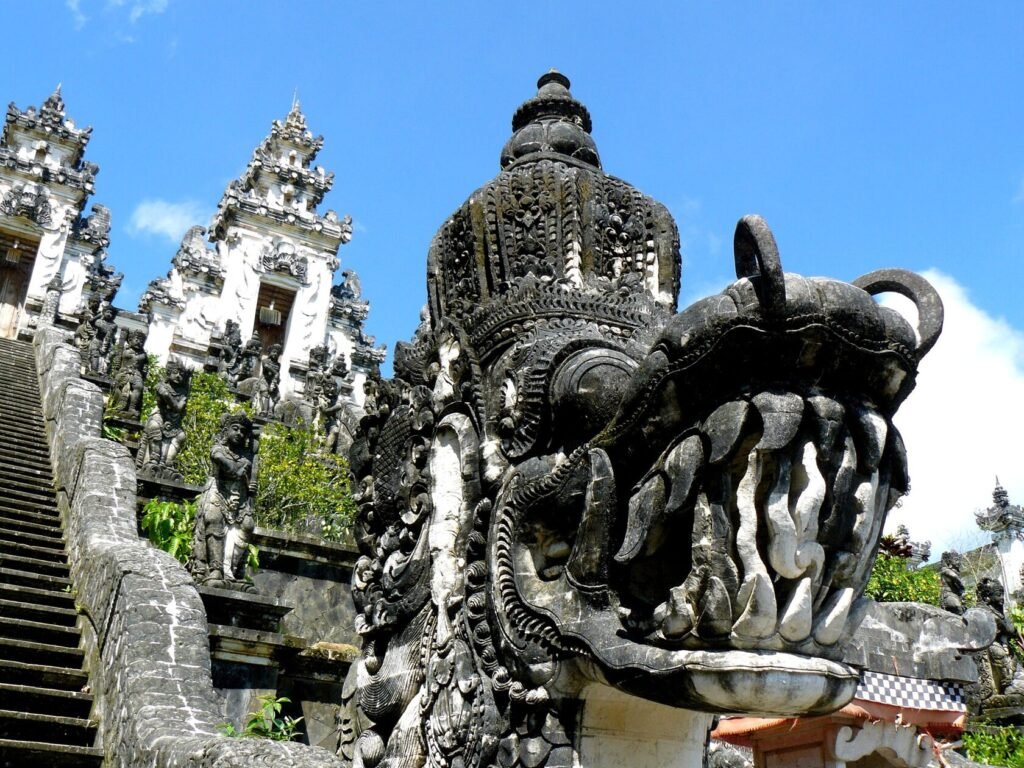
Pura Lempuyang Temple is located here